Birdr

Chestnut Seedeater vs Double-collared Seedeater

Sporophila cinnamomea versus Sporophila caerulescens

Play a quiz with Chestnut Seedeater and Double-collared Seedeater
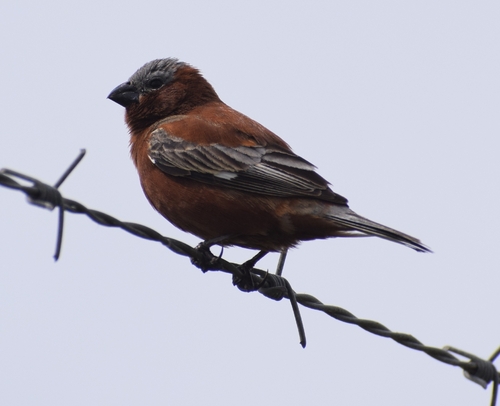
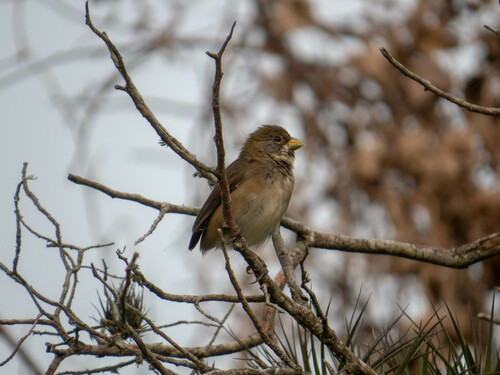
Chestnut Seedeater (Sporophila cinnamomea) Chestnut Seedeater
Double-collared Seedeater (Sporophila caerulescens) Double-collared Seedeater

Media

Loading…

In short

The Chestnut Seedeater and Double-collared Seedeater are both small, similar-looking birds found in South America. The most reliable field mark is the plumage coloration: the Chestnut Seedeater has a distinctive chestnut hue, while the Double-collared Seedeater features a more slate-colored appearance with a double collar pattern. Both species belong to the same family, so structural differences are minimal.

Identification tips

Size

Both species are small and similar in size, typical of the Sporophila genus.

Plumage

The Chestnut Seedeater has a chestnut-colored plumage, which is its most distinguishing feature. In contrast, the Double-collared Seedeater exhibits a slate-colored plumage with a notable double collar pattern, which can be a key differentiator.

Behaviour

Behavioral differences are not well-documented, but both species are likely to exhibit similar feeding and social behaviors typical of seedeaters.

Habitat

The Chestnut Seedeater prefers tall, undulating grasslands, which are increasingly threatened by habitat loss. The Double-collared Seedeater is more adaptable and can be found in a wider range of habitats, including open and semi-open areas.

Voice

Specific vocalization differences are not well-documented, but listening for variations in song and call may help in distinguishing these species.

Submit a better description

Use the same sections as the comparison. Your text is published immediately.

The Chestnut Seedeater and Double-collared Seedeater are both small, similar-looking birds found in South America. The most reliable field mark is the plumage coloration: the Chestnut Seedeater has a distinctive chestnut hue, while the Double-collared Seedeater features a more slate-colored appearance with a double collar pattern. Both species belong to the same family, so structural differences are minimal.

  • Look for the chestnut coloration on the Chestnut Seedeater.
  • Identify the double collar pattern on the Double-collared Seedeater.
  • Consider habitat: Chestnut Seedeaters are more likely in tall grasslands, while Double-collared Seedeaters can be found in diverse open areas.
  • Use vocalizations cautiously, as specific differences are not well-documented.

Both species are small and similar in size, typical of the Sporophila genus.

The Chestnut Seedeater has a chestnut-colored plumage, which is its most distinguishing feature. In contrast, the Double-collared Seedeater exhibits a slate-colored plumage with a notable double collar pattern, which can be a key differentiator.

Behavioral differences are not well-documented, but both species are likely to exhibit similar feeding and social behaviors typical of seedeaters.

The Chestnut Seedeater prefers tall, undulating grasslands, which are increasingly threatened by habitat loss. The Double-collared Seedeater is more adaptable and can be found in a wider range of habitats, including open and semi-open areas.

Specific vocalization differences are not well-documented, but listening for variations in song and call may help in distinguishing these species.

Discard your changes?

You have unsaved edits. If you leave now, those changes will be lost.

Chestnut Seedeater · Double-collared Seedeater · My Tricky Birds