Birdr

Chestnut-sided Warbler vs Blackpoll Warbler

Setophaga pensylvanica versus Setophaga striata

Play a quiz with Chestnut-sided Warbler and Blackpoll Warbler
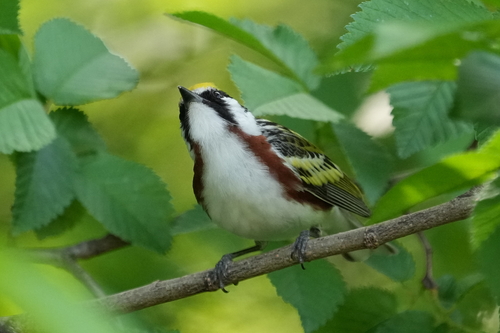
Chestnut-sided Warbler (Setophaga pensylvanica) Chestnut-sided Warbler
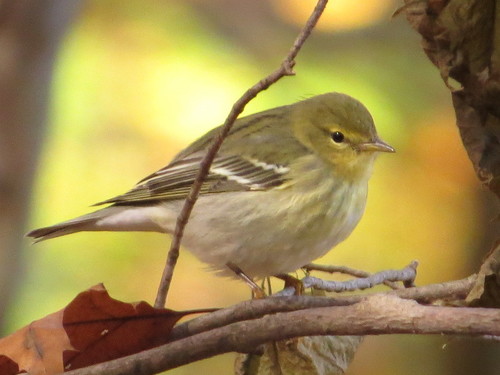
Blackpoll Warbler (Setophaga striata) Blackpoll Warbler

Media

Loading…

In short

The Chestnut-sided Warbler and Blackpoll Warbler can be distinguished by their plumage and habitat preferences. The Chestnut-sided Warbler has distinctive chestnut flanks, while the Blackpoll Warbler features a black cap and white cheeks during breeding season. They also differ in their preferred habitats, with the Chestnut-sided Warbler favoring deciduous forests and the Blackpoll Warbler breeding in northern coniferous forests.

Identification tips

Size

Both species are similar in size, typical of small warblers.

Plumage

The Chestnut-sided Warbler has a bright yellow crown, white underparts, and prominent chestnut flanks. In contrast, the Blackpoll Warbler during breeding season displays a black cap, white cheeks, and streaked back, with less vibrant coloration outside of breeding.

Behaviour

Chestnut-sided Warblers often forage by moving along branches with their tails cocked, while Blackpoll Warblers are known for their long migratory flights.

Habitat

Chestnut-sided Warblers are found in deciduous forests, while Blackpoll Warblers breed in northern coniferous forests and migrate through various habitats.

Voice

The Chestnut-sided Warbler's song is often described as 'pleased, pleased, pleased to meetcha,' while the Blackpoll Warbler's song is a high-pitched series of thin notes.

Submit a better description

Use the same sections as the comparison. Your text is published immediately.

The Chestnut-sided Warbler and Blackpoll Warbler can be distinguished by their plumage and habitat preferences. The Chestnut-sided Warbler has distinctive chestnut flanks, while the Blackpoll Warbler features a black cap and white cheeks during breeding season. They also differ in their preferred habitats, with the Chestnut-sided Warbler favoring deciduous forests and the Blackpoll Warbler breeding in northern coniferous forests.

  • Chestnut-sided Warbler: Look for chestnut flanks and yellow crown in deciduous forests.
  • Blackpoll Warbler: Identify by black cap and white cheeks in coniferous forests during breeding season.
  • Listen for distinct songs: 'pleased to meetcha' for Chestnut-sided and high-pitched series for Blackpoll.

Both species are similar in size, typical of small warblers.

The Chestnut-sided Warbler has a bright yellow crown, white underparts, and prominent chestnut flanks. In contrast, the Blackpoll Warbler during breeding season displays a black cap, white cheeks, and streaked back, with less vibrant coloration outside of breeding.

Chestnut-sided Warblers often forage by moving along branches with their tails cocked, while Blackpoll Warblers are known for their long migratory flights.

Chestnut-sided Warblers are found in deciduous forests, while Blackpoll Warblers breed in northern coniferous forests and migrate through various habitats.

The Chestnut-sided Warbler's song is often described as 'pleased, pleased, pleased to meetcha,' while the Blackpoll Warbler's song is a high-pitched series of thin notes.

Discard your changes?

You have unsaved edits. If you leave now, those changes will be lost.

Chestnut-sided Warbler · Blackpoll Warbler · My Tricky Birds