Chestnut-winged Cuckoo vs Pied Cuckoo
Clamator coromandus versus Clamator jacobinus
Play a quiz with Chestnut-winged Cuckoo and Pied Cuckoo
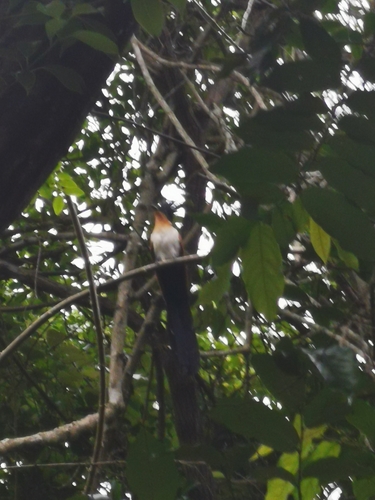
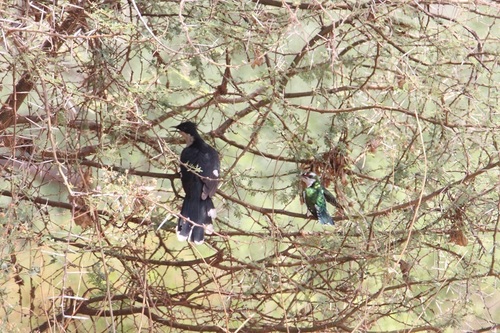
Chestnut-winged Cuckoo
Pied Cuckoo
In short
The Chestnut-winged Cuckoo and Pied Cuckoo can be distinguished primarily by their wing coloration and tail pattern. The Chestnut-winged Cuckoo has distinctive chestnut-colored wings, whereas the Pied Cuckoo is predominantly black and white with no chestnut tones. Both species are similar in size and structure, making plumage the key differentiator.
Identification tips
- Look for the chestnut wing coloration to identify the Chestnut-winged Cuckoo. 2. Note the black and white plumage of the Pied Cuckoo, especially the absence of chestnut tones. 3. Observe the tail pattern: the Pied Cuckoo has a more pronounced black and white tail. 4. Consider habitat and season, as the Pied Cuckoo is often linked to monsoon regions.
Size
Both species are similar in size, typical of medium-sized cuckoos.
Plumage
The Chestnut-winged Cuckoo features chestnut wings and a contrasting black crest, while the Pied Cuckoo is characterized by its striking black and white plumage without chestnut tones. The Pied Cuckoo has a black cap and white underparts, with a long, graduated tail that is also black and white.
Behaviour
Both species exhibit typical cuckoo behavior, often seen perched conspicuously or flying with a distinctive undulating flight. No significant behavioral differences are noted.
Habitat
Both species can be found in open woodlands and scrubby areas, but the Pied Cuckoo is more adaptable to drier regions and is often associated with monsoon seasons in India.
Voice
The vocalizations of these species are not well-documented in the provided notes, but generally, cuckoos have distinctive calls that can aid in identification.