Birdr

Chimney Swift vs Common Swift

Chaetura pelagica versus Apus apus

Play a quiz with Chimney Swift and Common Swift
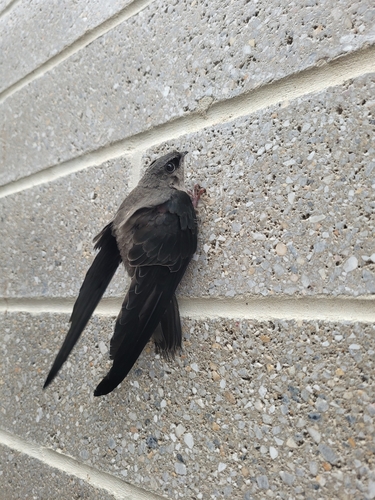
Chimney Swift (Chaetura pelagica) Chimney Swift
Common Swift (Apus apus) Common Swift

Media

Loading…

In short

Chimney Swift and Common Swift are both dark, fast-flying birds, but the Chimney Swift is smaller with a more compact body and shorter, squared tail. Common Swifts have a larger, more rakish appearance with a deeply forked tail. Observing the tail shape and flight style can help distinguish them.

Identification tips

  1. Tail Shape: Chimney Swift has a squared tail; Common Swift has a deeply forked tail. 2. Size and Flight: Chimney Swift is smaller and more compact; Common Swift is larger and more rakish. 3. Plumage: Look for the off-white throat patch on Common Swift. 4. Vocalization: Listen for the high-pitched chatter of Chimney Swift versus the loud screams of Common Swift. 5. Habitat: Consider the setting; Chimney Swifts prefer urban areas with chimneys, while Common Swifts are found in a variety of open habitats.

Size

Chimney Swift is smaller and more compact, while Common Swift is larger with a longer wingspan.

Plumage

Chimney Swift is uniformly sooty gray-brown with no distinct markings, whereas Common Swift is black-brown with a small off-white throat patch.

Behaviour

Chimney Swifts often roost in chimneys and are more likely to be seen in urban areas. Common Swifts are known for their almost continuous flight and can be found in a variety of open habitats.

Habitat

Chimney Swifts are typically found in urban areas with suitable chimneys for roosting. Common Swifts inhabit a wide range of habitats, from urban areas to open countryside across Europe, Asia, and Africa.

Voice

Chimney Swifts have a high-pitched, chattering call, while Common Swifts produce a loud, screaming call, especially during flight.

Submit a better description

Use the same sections as the comparison. Your text is published immediately.

Chimney Swift and Common Swift are both dark, fast-flying birds, but the Chimney Swift is smaller with a more compact body and shorter, squared tail. Common Swifts have a larger, more rakish appearance with a deeply forked tail. Observing the tail shape and flight style can help distinguish them.

  1. Tail Shape: Chimney Swift has a squared tail; Common Swift has a deeply forked tail. 2. Size and Flight: Chimney Swift is smaller and more compact; Common Swift is larger and more rakish. 3. Plumage: Look for the off-white throat patch on Common Swift. 4. Vocalization: Listen for the high-pitched chatter of Chimney Swift versus the loud screams of Common Swift. 5. Habitat: Consider the setting; Chimney Swifts prefer urban areas with chimneys, while Common Swifts are found in a variety of open habitats.

Chimney Swift is smaller and more compact, while Common Swift is larger with a longer wingspan.

Chimney Swift is uniformly sooty gray-brown with no distinct markings, whereas Common Swift is black-brown with a small off-white throat patch.

Chimney Swifts often roost in chimneys and are more likely to be seen in urban areas. Common Swifts are known for their almost continuous flight and can be found in a variety of open habitats.

Chimney Swifts are typically found in urban areas with suitable chimneys for roosting. Common Swifts inhabit a wide range of habitats, from urban areas to open countryside across Europe, Asia, and Africa.

Chimney Swifts have a high-pitched, chattering call, while Common Swifts produce a loud, screaming call, especially during flight.

Discard your changes?

You have unsaved edits. If you leave now, those changes will be lost.

Chimney Swift · Common Swift · My Tricky Birds