Birdr

Chinese Pond Heron vs Eastern Cattle-Egret

Ardeola bacchus versus Ardea coromanda

Play a quiz with Chinese Pond Heron and Eastern Cattle-Egret

Chinese Pond Heron (Ardeola bacchus) Chinese Pond Heron
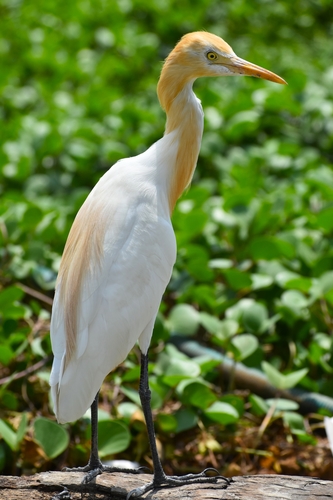
Eastern Cattle-Egret (Ardea coromanda) Eastern Cattle-Egret

Media

Loading…

In short

The Chinese Pond Heron and Eastern Cattle Egret can be distinguished by their habitat preferences and plumage during breeding season. The Chinese Pond Heron is typically found near water bodies, while the Eastern Cattle Egret is often seen in grasslands and pastures, frequently near grazing animals.

Identification tips

  1. Habitat: Look for Chinese Pond Herons near water and Eastern Cattle Egrets in fields with cattle. 2. Breeding Plumage: Note the maroon and blue of the Chinese Pond Heron versus the buffy-orange of the Eastern Cattle Egret. 3. Behavior: Observe the Eastern Cattle Egret's tendency to follow livestock and its head-pumping motion. 4. Seasonal Changes: Be cautious outside the breeding season when both species appear mostly white.

Size

Both species are similar in size, but the Eastern Cattle Egret may appear slightly bulkier due to its posture.

Plumage

In breeding plumage, the Chinese Pond Heron shows a striking combination of maroon, blue, and white, while the Eastern Cattle Egret displays buffy-orange on the head and neck. Outside of breeding season, both species are predominantly white, making them harder to distinguish by plumage alone.

Behaviour

The Eastern Cattle Egret is known for its association with grazing animals and its distinctive head-pumping strut. The Chinese Pond Heron is more solitary and typically forages quietly along water edges.

Habitat

Chinese Pond Herons are usually found near freshwater habitats like ponds and marshes. In contrast, Eastern Cattle Egrets prefer open grasslands and fields, often in proximity to livestock.

Voice

Both species are generally quiet, but the Eastern Cattle Egret may produce more vocalizations when in large flocks or breeding colonies.

Submit a better description

Use the same sections as the comparison. Your text is published immediately.

The Chinese Pond Heron and Eastern Cattle Egret can be distinguished by their habitat preferences and plumage during breeding season. The Chinese Pond Heron is typically found near water bodies, while the Eastern Cattle Egret is often seen in grasslands and pastures, frequently near grazing animals.

  1. Habitat: Look for Chinese Pond Herons near water and Eastern Cattle Egrets in fields with cattle. 2. Breeding Plumage: Note the maroon and blue of the Chinese Pond Heron versus the buffy-orange of the Eastern Cattle Egret. 3. Behavior: Observe the Eastern Cattle Egret's tendency to follow livestock and its head-pumping motion. 4. Seasonal Changes: Be cautious outside the breeding season when both species appear mostly white.

Both species are similar in size, but the Eastern Cattle Egret may appear slightly bulkier due to its posture.

In breeding plumage, the Chinese Pond Heron shows a striking combination of maroon, blue, and white, while the Eastern Cattle Egret displays buffy-orange on the head and neck. Outside of breeding season, both species are predominantly white, making them harder to distinguish by plumage alone.

The Eastern Cattle Egret is known for its association with grazing animals and its distinctive head-pumping strut. The Chinese Pond Heron is more solitary and typically forages quietly along water edges.

Chinese Pond Herons are usually found near freshwater habitats like ponds and marshes. In contrast, Eastern Cattle Egrets prefer open grasslands and fields, often in proximity to livestock.

Both species are generally quiet, but the Eastern Cattle Egret may produce more vocalizations when in large flocks or breeding colonies.

Discard your changes?

You have unsaved edits. If you leave now, those changes will be lost.

Chinese Pond Heron · Eastern Cattle-Egret · My Tricky Birds