Birdr

Chinese Pond Heron vs Javan Pond Heron

Ardeola bacchus versus Ardeola speciosa

Play a quiz with Chinese Pond Heron and Javan Pond Heron
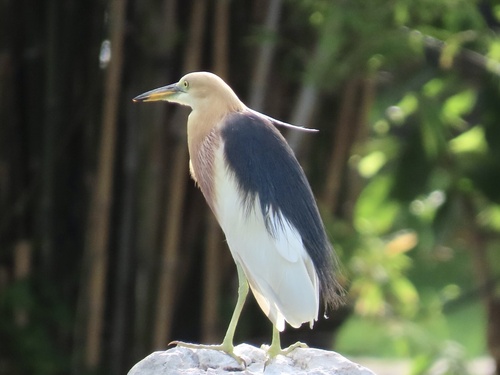
Chinese Pond Heron (Ardeola bacchus) Chinese Pond Heron
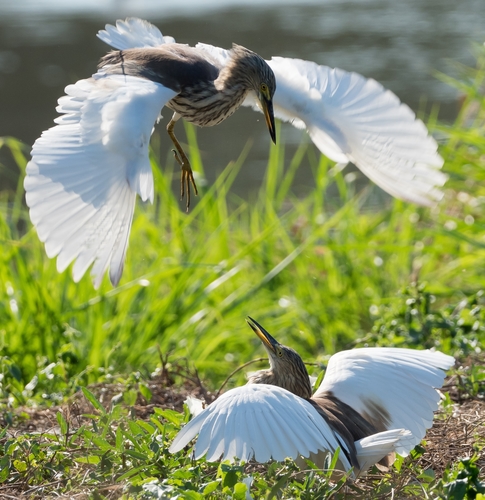
Javan Pond Heron (Ardeola speciosa) Javan Pond Heron

Media

Loading…

In short

Chinese Pond Heron and Javan Pond Heron are extremely similar, especially outside the breeding season, when their brown-and-white flecked non-breeding plumage is virtually indistinguishable in the field. The most reliable separation is in full breeding plumage: Chinese shows a combination of red, blue, and white, whereas Javan is orange, slaty, and white. Both have white wings, yellow eyes and legs, and a yellow bill with a black tip. Juvenile and non-breeding birds are not safely separated by plumage in the field. Range and context may help, but overlap and vagrancy occur.

Identification tips

  1. Breeding plumage is key: In full breeding plumage, look for the head and neck color—Chinese Pond Heron is red and blue, Javan Pond Heron is orange and slaty. This is the only consistently reliable field mark.
  2. Non-breeding and juvenile birds are not safely separable: Both species are brown and white-flecked outside the breeding season and as immatures. Do not attempt field separation on plumage alone in these plumages.
  3. White wings in all plumages: Both species show white wings in flight and at rest, so this feature does not help distinguish them.
  4. Bill, leg, and eye color: Both have yellow bills with black tips, yellow eyes, and yellow legs in all plumages—these are not useful for separation.
  5. Size and structure: Chinese is slightly larger on average, but the difference is too small to be useful in the field.
  6. Range and context: Chinese Pond Heron is expected in East Asia, Javan in Southeast Asia. In areas of overlap or where vagrancy is possible, do not rely on range alone.
  7. Mixed-species heronries: Both species may nest with other pond herons, so association with other species does not help.
  8. Flight pattern: No known difference in flight style or wing pattern between these two species at any age.
  9. Habitat: Both use similar wetland habitats; habitat choice does not separate them.
  10. Behavior: Foraging and nesting behavior are alike and not diagnostic.
  11. Sex differences: No sexual dimorphism is noted in either species; males and females look alike.
  12. Seasonality: Only breeding adults are safely separated by plumage. Outside the breeding season, identification to species is not possible in the field.
  13. Vocalization: No distinctive calls are described that separate these two species.
  14. Photographic review: If you have a photo of a bird in breeding plumage, check for the specific color combination on the head and neck. If not in breeding plumage, identification is not possible from photos alone.
  15. Caution in reporting: If observing a pond heron outside the expected range or season, be cautious about assigning to species unless breeding plumage is clearly visible.

Size

Chinese Pond Heron averages about 47 cm in length, while Javan Pond Heron is slightly smaller at 45 cm, but this 2 cm difference is not reliably discernible in the field. Both species share similar structure: medium-sized, compact herons with short necks and legs relative to larger herons. Bill, leg, and wing proportions are essentially identical and not useful for field separation.

Plumage

In breeding plumage, Chinese Pond Heron displays a striking mix of red, blue, and white on the body, while Javan Pond Heron shows orange, slaty (bluish-gray), and white. These colors are most apparent on the head, neck, and upperparts. Outside the breeding season, both species become brownish and heavily flecked with white, especially on the upperparts, and are essentially indistinguishable. Juvenile and first-winter birds also share this brown-and-white flecked appearance, with no known diagnostic upperwing or flight pattern differences. Both have white wings in all plumages, which is a shared feature within the pond heron group.

Behaviour

Both species forage in shallow wetlands, often standing motionless or making slow, deliberate movements to catch prey. They may be seen singly or in small groups, and both nest in mixed-species heronries. Flight is typically slow and direct, with neck retracted. No behavioral differences are noted that aid field identification between these two species.

Habitat

Chinese Pond Heron is found in lowland freshwater and some saltwater wetlands across East Asia, while Javan Pond Heron occupies similar habitats in Southeast Asia. Both species frequent shallow ponds, marshes, and rice paddies. Their ranges are mostly separate but can overlap in parts of Southeast Asia, and both are prone to vagrancy. Habitat alone is not diagnostic where ranges overlap.

Submit a better description

Use the same sections as the comparison. Your text is published immediately.

Chinese Pond Heron and Javan Pond Heron are extremely similar, especially outside the breeding season, when their brown-and-white flecked non-breeding plumage is virtually indistinguishable in the field. The most reliable separation is in full breeding plumage: Chinese shows a combination of red, blue, and white, whereas Javan is orange, slaty, and white. Both have white wings, yellow eyes and legs, and a yellow bill with a black tip. Juvenile and non-breeding birds are not safely separated by plumage in the field. Range and context may help, but overlap and vagrancy occur.

  1. Breeding plumage is key: In full breeding plumage, look for the head and neck color—Chinese Pond Heron is red and blue, Javan Pond Heron is orange and slaty. This is the only consistently reliable field mark.
  2. Non-breeding and juvenile birds are not safely separable: Both species are brown and white-flecked outside the breeding season and as immatures. Do not attempt field separation on plumage alone in these plumages.
  3. White wings in all plumages: Both species show white wings in flight and at rest, so this feature does not help distinguish them.
  4. Bill, leg, and eye color: Both have yellow bills with black tips, yellow eyes, and yellow legs in all plumages—these are not useful for separation.
  5. Size and structure: Chinese is slightly larger on average, but the difference is too small to be useful in the field.
  6. Range and context: Chinese Pond Heron is expected in East Asia, Javan in Southeast Asia. In areas of overlap or where vagrancy is possible, do not rely on range alone.
  7. Mixed-species heronries: Both species may nest with other pond herons, so association with other species does not help.
  8. Flight pattern: No known difference in flight style or wing pattern between these two species at any age.
  9. Habitat: Both use similar wetland habitats; habitat choice does not separate them.
  10. Behavior: Foraging and nesting behavior are alike and not diagnostic.
  11. Sex differences: No sexual dimorphism is noted in either species; males and females look alike.
  12. Seasonality: Only breeding adults are safely separated by plumage. Outside the breeding season, identification to species is not possible in the field.
  13. Vocalization: No distinctive calls are described that separate these two species.
  14. Photographic review: If you have a photo of a bird in breeding plumage, check for the specific color combination on the head and neck. If not in breeding plumage, identification is not possible from photos alone.
  15. Caution in reporting: If observing a pond heron outside the expected range or season, be cautious about assigning to species unless breeding plumage is clearly visible.

Chinese Pond Heron averages about 47 cm in length, while Javan Pond Heron is slightly smaller at 45 cm, but this 2 cm difference is not reliably discernible in the field. Both species share similar structure: medium-sized, compact herons with short necks and legs relative to larger herons. Bill, leg, and wing proportions are essentially identical and not useful for field separation.

In breeding plumage, Chinese Pond Heron displays a striking mix of red, blue, and white on the body, while Javan Pond Heron shows orange, slaty (bluish-gray), and white. These colors are most apparent on the head, neck, and upperparts. Outside the breeding season, both species become brownish and heavily flecked with white, especially on the upperparts, and are essentially indistinguishable. Juvenile and first-winter birds also share this brown-and-white flecked appearance, with no known diagnostic upperwing or flight pattern differences. Both have white wings in all plumages, which is a shared feature within the pond heron group.

Both species forage in shallow wetlands, often standing motionless or making slow, deliberate movements to catch prey. They may be seen singly or in small groups, and both nest in mixed-species heronries. Flight is typically slow and direct, with neck retracted. No behavioral differences are noted that aid field identification between these two species.

Chinese Pond Heron is found in lowland freshwater and some saltwater wetlands across East Asia, while Javan Pond Heron occupies similar habitats in Southeast Asia. Both species frequent shallow ponds, marshes, and rice paddies. Their ranges are mostly separate but can overlap in parts of Southeast Asia, and both are prone to vagrancy. Habitat alone is not diagnostic where ranges overlap.

Discard your changes?

You have unsaved edits. If you leave now, those changes will be lost.

Chinese Pond Heron · Javan Pond Heron · My Tricky Birds