Chipping Sparrow vs Clay-coloured Sparrow
Spizella passerina versus Spizella pallida
Play a quiz with Chipping Sparrow and Clay-coloured Sparrow
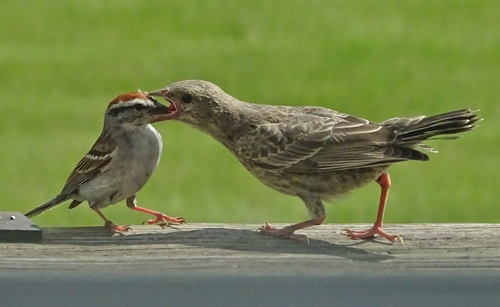
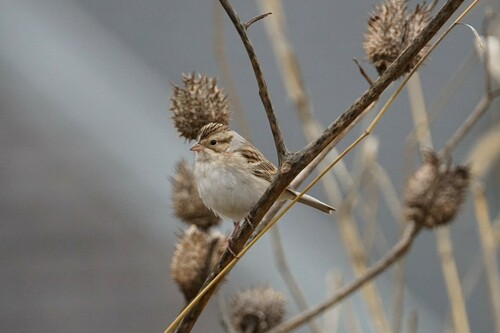
Chipping Sparrow
Clay-coloured Sparrow
In short
Chipping Sparrow and Clay-colored Sparrow are similar small sparrows often found in overlapping habitats. The most reliable field mark is the head pattern: Chipping Sparrow has a distinct rusty cap and a black line through the eye, while Clay-colored Sparrow shows a pale crown stripe and a buffy supercilium. Both species are small and slender, but subtle differences in plumage and behavior can aid identification.
Identification tips
- Look for the rusty cap and black eye line of the Chipping Sparrow.
- Note the pale crown stripe and buffy supercilium of the Clay-colored Sparrow.
- Listen for the trill of the Chipping Sparrow versus the buzzy song of the Clay-colored Sparrow.
- Consider habitat: Chipping Sparrows are more urban, while Clay-colored Sparrows prefer shrubby grasslands.
Size
Both species are similar in size, small and slender, typical of the Spizella sparrows.
Plumage
Chipping Sparrow has a rusty cap and a black line through the eye, contrasting with its gray face. Clay-colored Sparrow has a pale crown stripe, buffy supercilium, and a more muted, brownish overall appearance. The Clay-colored Sparrow's nape is grayish, contrasting with its brown back.
Behaviour
Both species can be seen foraging on the ground or in low vegetation. Chipping Sparrows are often seen in more urban settings, while Clay-colored Sparrows may be found in shrubby grasslands.
Habitat
Chipping Sparrows are common in towns, gardens, and around human habitations. Clay-colored Sparrows prefer grasslands and shrublands, often affected by agricultural activities. Both species can overlap in suburban areas.
Voice
Chipping Sparrow's song is a rapid, dry trill, while the Clay-colored Sparrow's song is a series of buzzy notes, often described as insect-like.