Birdr

Chipping Sparrow vs Rusty Sparrow

Spizella passerina versus Aimophila rufescens

Play a quiz with Chipping Sparrow and Rusty Sparrow
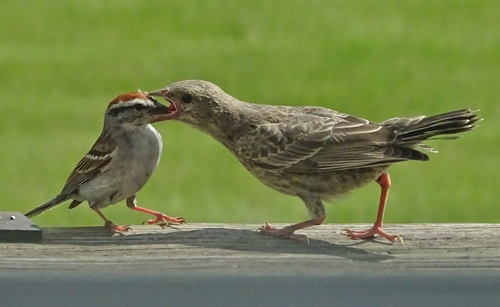
Chipping Sparrow (Spizella passerina) Chipping Sparrow
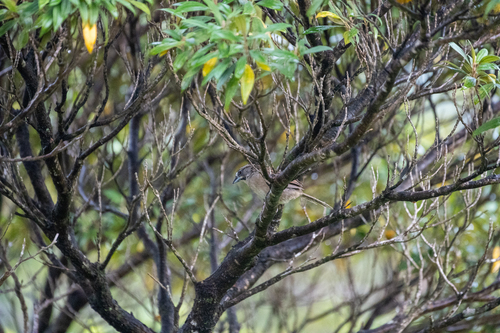
Rusty Sparrow (Aimophila rufescens) Rusty Sparrow

Media

Loading…

In short

The Chipping Sparrow and Rusty Sparrow can be distinguished by their head patterns and habitat preferences. The Chipping Sparrow has a distinctive rufous crown and a clear grayish face with a black eye line, while the Rusty Sparrow has a more uniformly rusty head and lacks the sharp eye line. Both species are small New World sparrows but occupy different habitats.

Identification tips

1. Head Pattern: Look for the rufous crown and black eye line of the Chipping Sparrow. 2. Habitat: Chipping Sparrows are more likely in open, grassy areas, while Rusty Sparrows prefer scrubby habitats. 3. Vocalization: Listen for the Chipping Sparrow's dry trill. 4. Overall Plumage: Note the more uniform rusty head of the Rusty Sparrow compared to the Chipping Sparrow's contrasting head pattern.

Size

Both species are small sparrows, with similar overall size and structure.

Plumage

The Chipping Sparrow features a rufous crown with a clear grayish face and a distinct black eye line. In contrast, the Rusty Sparrow has a more uniformly rusty head and lacks the sharp eye line seen in Chipping Sparrows.

Behaviour

Chipping Sparrows are often seen in open, grassy areas and are known for their territorial behavior during breeding. Rusty Sparrows are less studied in this regard, but they tend to be more secretive.

Habitat

Chipping Sparrows are commonly found in towns, gardens, and open woodlands across North America. Rusty Sparrows prefer more arid and scrubby habitats, often in more southern regions.

Voice

The Chipping Sparrow has a distinctive, dry trill that is often heard in its range. Specific vocalization details for the Rusty Sparrow are less well-documented.

Submit a better description

Use the same sections as the comparison. Your text is published immediately.

The Chipping Sparrow and Rusty Sparrow can be distinguished by their head patterns and habitat preferences. The Chipping Sparrow has a distinctive rufous crown and a clear grayish face with a black eye line, while the Rusty Sparrow has a more uniformly rusty head and lacks the sharp eye line. Both species are small New World sparrows but occupy different habitats.

1. Head Pattern: Look for the rufous crown and black eye line of the Chipping Sparrow. 2. Habitat: Chipping Sparrows are more likely in open, grassy areas, while Rusty Sparrows prefer scrubby habitats. 3. Vocalization: Listen for the Chipping Sparrow's dry trill. 4. Overall Plumage: Note the more uniform rusty head of the Rusty Sparrow compared to the Chipping Sparrow's contrasting head pattern.

Both species are small sparrows, with similar overall size and structure.

The Chipping Sparrow features a rufous crown with a clear grayish face and a distinct black eye line. In contrast, the Rusty Sparrow has a more uniformly rusty head and lacks the sharp eye line seen in Chipping Sparrows.

Chipping Sparrows are often seen in open, grassy areas and are known for their territorial behavior during breeding. Rusty Sparrows are less studied in this regard, but they tend to be more secretive.

Chipping Sparrows are commonly found in towns, gardens, and open woodlands across North America. Rusty Sparrows prefer more arid and scrubby habitats, often in more southern regions.

The Chipping Sparrow has a distinctive, dry trill that is often heard in its range. Specific vocalization details for the Rusty Sparrow are less well-documented.

Discard your changes?

You have unsaved edits. If you leave now, those changes will be lost.

Chipping Sparrow · Rusty Sparrow · My Tricky Birds