Birdr

Christmas Island Frigatebird vs Great Cormorant

Fregata andrewsi versus Phalacrocorax carbo

Play a quiz with Christmas Island Frigatebird and Great Cormorant
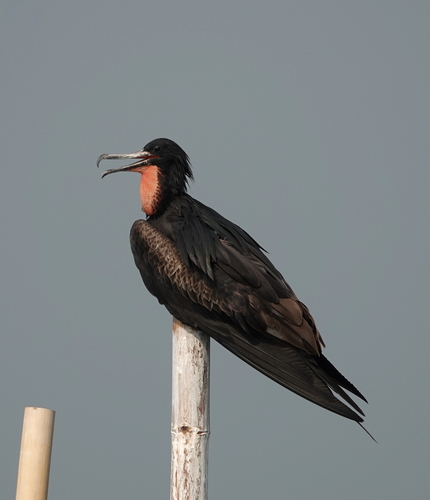
Christmas Island Frigatebird (Fregata andrewsi) Christmas Island Frigatebird
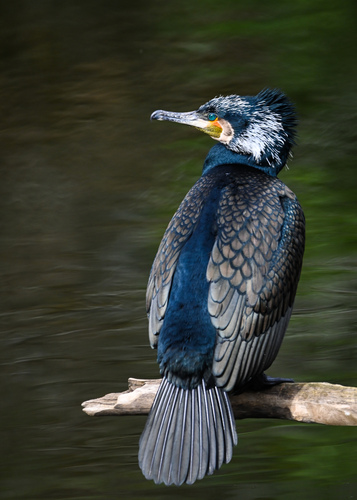
Great Cormorant (Phalacrocorax carbo) Great Cormorant

Media

Loading…

In short

The Christmas Island Frigatebird and Great Cormorant are both large seabirds, but they differ significantly in appearance and behavior. The frigatebird is known for its long wings and forked tail, while the cormorant has a more robust body and shorter tail. Observing their flight and feeding habits can also help in distinguishing them.

Identification tips

1. Flight silhouette: Look for the frigatebird's long, pointed wings and deeply forked tail versus the cormorant's shorter wings and tail. 2. Behavior: Frigatebirds soar and rarely dive, while cormorants are often seen diving. 3. Plumage: Note the frigatebird's glossy black with a white belly patch in females, compared to the cormorant's more uniform dark plumage with a white throat patch in breeding season.

Size

The Christmas Island Frigatebird is generally larger with a wingspan that can exceed 2 meters, whereas the Great Cormorant is bulkier with a shorter wingspan around 1.5 meters.

Plumage

The frigatebird has a striking black plumage with a glossy sheen and a distinctive white belly patch in females. The Great Cormorant has a more uniform dark plumage with a white throat patch during breeding season.

Behaviour

Frigatebirds are known for their aerial prowess, often seen soaring high and rarely landing on water. In contrast, cormorants are strong divers, often seen swimming and diving for fish.

Habitat

The Christmas Island Frigatebird is typically found over tropical oceans and nests on Christmas Island. The Great Cormorant is more versatile, found in coastal and inland waters across a broad range.

Voice

Frigatebirds are generally silent, making occasional rattling sounds. Great Cormorants are also relatively quiet but can produce guttural croaks, especially in breeding colonies.

Submit a better description

Use the same sections as the comparison. Your text is published immediately.

The Christmas Island Frigatebird and Great Cormorant are both large seabirds, but they differ significantly in appearance and behavior. The frigatebird is known for its long wings and forked tail, while the cormorant has a more robust body and shorter tail. Observing their flight and feeding habits can also help in distinguishing them.

1. Flight silhouette: Look for the frigatebird's long, pointed wings and deeply forked tail versus the cormorant's shorter wings and tail. 2. Behavior: Frigatebirds soar and rarely dive, while cormorants are often seen diving. 3. Plumage: Note the frigatebird's glossy black with a white belly patch in females, compared to the cormorant's more uniform dark plumage with a white throat patch in breeding season.

The Christmas Island Frigatebird is generally larger with a wingspan that can exceed 2 meters, whereas the Great Cormorant is bulkier with a shorter wingspan around 1.5 meters.

The frigatebird has a striking black plumage with a glossy sheen and a distinctive white belly patch in females. The Great Cormorant has a more uniform dark plumage with a white throat patch during breeding season.

Frigatebirds are known for their aerial prowess, often seen soaring high and rarely landing on water. In contrast, cormorants are strong divers, often seen swimming and diving for fish.

The Christmas Island Frigatebird is typically found over tropical oceans and nests on Christmas Island. The Great Cormorant is more versatile, found in coastal and inland waters across a broad range.

Frigatebirds are generally silent, making occasional rattling sounds. Great Cormorants are also relatively quiet but can produce guttural croaks, especially in breeding colonies.

Discard your changes?

You have unsaved edits. If you leave now, those changes will be lost.

Christmas Island Frigatebird · Great Cormorant · My Tricky Birds