Cinnamon Bittern vs Schrenck's Bittern
Botaurus cinnamomeus versus Botaurus eurhythmus
Play a quiz with Cinnamon Bittern and Schrenck's Bittern
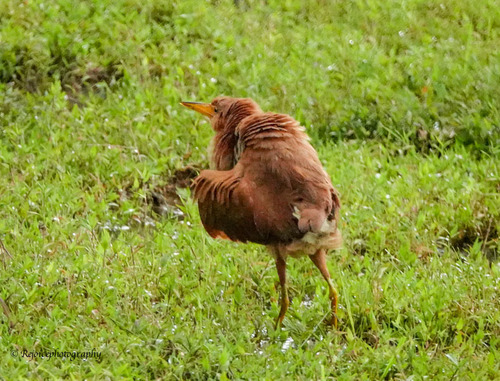
Cinnamon Bittern
Schrenck's Bittern
In short
The Cinnamon Bittern and Schrenck's Bittern are both small, secretive herons, but they can be distinguished by their plumage and behavior. The Cinnamon Bittern is more uniformly rufous, while Schrenck's Bittern has more contrasting plumage with darker streaks. Observing their behavior and habitat preferences can also aid in identification.
Identification tips
- Look for the uniform rufous coloration of the Cinnamon Bittern versus the contrasting plumage of Schrenck's Bittern.
- Observe habitat: Cinnamon Bitterns are more reed bed specialists.
- Note behavior: Schrenck's Bittern may be more visible during the breeding season.
- Use binoculars to check for streaking patterns on the back and wings.
Size
Both species are similar in size, being small bitterns, but there are no significant size differences to rely on for identification.
Plumage
The Cinnamon Bittern is characterized by its overall rufous or cinnamon coloration, which is more uniform. In contrast, Schrenck's Bittern has a more contrasting plumage with darker streaks on the back and wings, and a paler underbody with some streaking. Males of Schrenck's Bittern may show a more pronounced contrast between the dark back and lighter underparts.
Behaviour
Both species exhibit typical bittern behavior, being secretive and often staying hidden in dense vegetation. However, Schrenck's Bittern may be slightly more likely to perch in open view, especially during the breeding season.
Habitat
Both species prefer wetlands, but the Cinnamon Bittern is more often found in reed beds and marshes, while Schrenck's Bittern can be found in similar habitats but may also frequent more wooded areas near water.
Voice
Vocalizations are not well-documented for either species, but both are generally quiet. Any calls are likely to be low and guttural, typical of bitterns.