Birdr

Cinnamon Bittern vs Yellow Bittern

Botaurus cinnamomeus versus Botaurus sinensis

Play a quiz with Cinnamon Bittern and Yellow Bittern
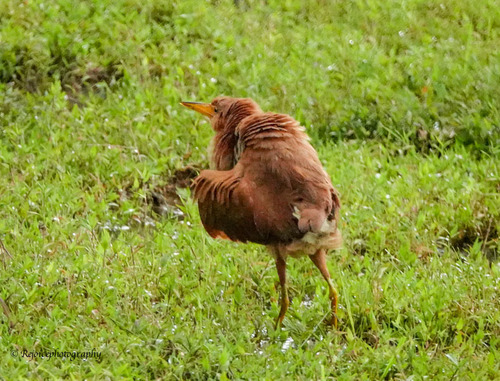
Cinnamon Bittern (Botaurus cinnamomeus) Cinnamon Bittern
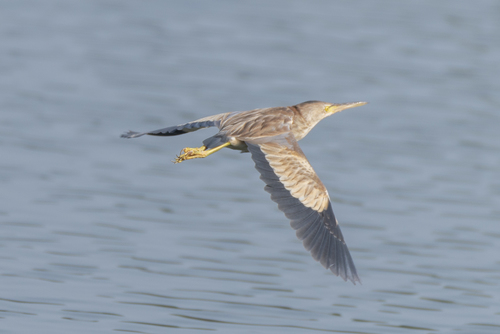
Yellow Bittern (Botaurus sinensis) Yellow Bittern

Media

Loading…

In short

The Cinnamon Bittern and Yellow Bittern are both small, elusive herons often found in similar habitats, but they can be distinguished by their plumage coloration and subtle structural differences. The Cinnamon Bittern is more uniformly cinnamon-brown, while the Yellow Bittern has a paler, more yellowish tone with contrasting darker streaks on the back. Observing their behavior and habitat preferences can also aid in identification.

Identification tips

Size

Both species are similar in size, small and compact, typical of bitterns.

Plumage

The Cinnamon Bittern has a more uniform cinnamon-brown plumage, whereas the Yellow Bittern displays a paler, yellowish tone with darker streaks on its back. The Yellow Bittern's underparts are lighter, often with a buffy or creamy appearance.

Behaviour

Both species exhibit typical bittern behavior, often skulking in dense vegetation and remaining motionless to avoid detection. The Yellow Bittern may be slightly more active and visible, especially when foraging.

Habitat

Both species inhabit wetlands, marshes, and reed beds, but the Cinnamon Bittern may prefer more densely vegetated areas. Both can be found in similar regions, often overlapping in range.

Voice

Vocalizations are not the most reliable distinguishing feature as both species have similar calls, often described as low, booming sounds. However, the Yellow Bittern may have a slightly higher-pitched call.

Submit a better description

Use the same sections as the comparison. Your text is published immediately.

The Cinnamon Bittern and Yellow Bittern are both small, elusive herons often found in similar habitats, but they can be distinguished by their plumage coloration and subtle structural differences. The Cinnamon Bittern is more uniformly cinnamon-brown, while the Yellow Bittern has a paler, more yellowish tone with contrasting darker streaks on the back. Observing their behavior and habitat preferences can also aid in identification.

  • Plumage: Look for the Cinnamon Bittern's uniform cinnamon-brown color versus the Yellow Bittern's paler, yellowish tone with darker streaks.
  • Habitat: Note the density of vegetation; Cinnamon Bitterns may prefer denser cover.
  • Behavior: Observe activity levels; Yellow Bitterns might be more active.
  • Vocalizations: Listen for calls, though they are similar, the Yellow Bittern's may be slightly higher-pitched.

Both species are similar in size, small and compact, typical of bitterns.

The Cinnamon Bittern has a more uniform cinnamon-brown plumage, whereas the Yellow Bittern displays a paler, yellowish tone with darker streaks on its back. The Yellow Bittern's underparts are lighter, often with a buffy or creamy appearance.

Both species exhibit typical bittern behavior, often skulking in dense vegetation and remaining motionless to avoid detection. The Yellow Bittern may be slightly more active and visible, especially when foraging.

Both species inhabit wetlands, marshes, and reed beds, but the Cinnamon Bittern may prefer more densely vegetated areas. Both can be found in similar regions, often overlapping in range.

Vocalizations are not the most reliable distinguishing feature as both species have similar calls, often described as low, booming sounds. However, the Yellow Bittern may have a slightly higher-pitched call.

Discard your changes?

You have unsaved edits. If you leave now, those changes will be lost.

Cinnamon Bittern · Yellow Bittern · My Tricky Birds