Birdr

Cirl Bunting vs Ortolan Bunting

Emberiza cirlus versus Emberiza hortulana

Play a quiz with Cirl Bunting and Ortolan Bunting
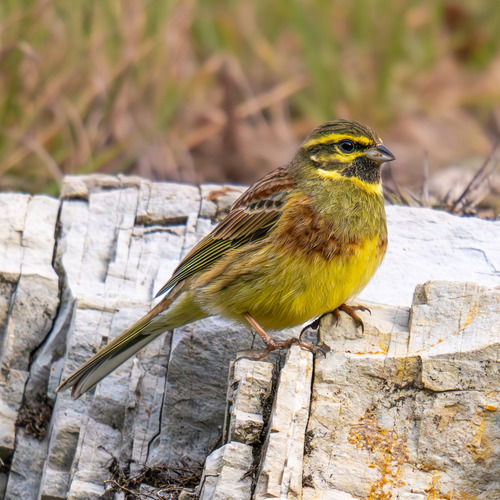
Cirl Bunting (Emberiza cirlus) Cirl Bunting
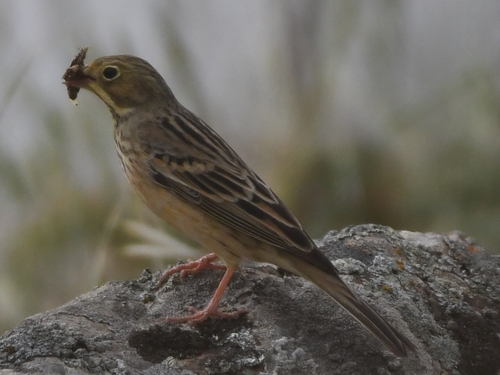
Ortolan Bunting (Emberiza hortulana) Ortolan Bunting

Media

Loading…

In short

To distinguish between the Cirl Bunting and the Ortolan Bunting, focus on the head pattern: the Cirl Bunting has a striking black and yellow face with a black throat, while the Ortolan Bunting shows a more muted, olive-green face with a pale throat. Both species are similar in size and structure, but these facial differences are key in the field.

Identification tips

Size

Both species are similar in size, typical of small buntings, with no significant differences in structure.

Plumage

The Cirl Bunting has a distinctive black and yellow face pattern with a black throat, whereas the Ortolan Bunting has a more subdued olive-green face with a pale throat. The Cirl Bunting's body is more vibrant overall, while the Ortolan is more uniform with a greyish-brown back.

Behaviour

Both species exhibit similar foraging behaviors, often seen on the ground or low in vegetation. No notable behavioral differences for field identification.

Habitat

Cirl Buntings are typically found in farmland and open woodland with dense hedgerows, while Ortolan Buntings prefer open, dry areas with scattered bushes or trees. Overlapping habitats can occur, so habitat alone is not a reliable differentiator.

Voice

The Cirl Bunting's song is a series of clear, metallic notes, while the Ortolan Bunting's song is a softer, more melodious series of whistles. Calls are similar and not easily distinguished without experience.

Submit a better description

Use the same sections as the comparison. Your text is published immediately.

To distinguish between the Cirl Bunting and the Ortolan Bunting, focus on the head pattern: the Cirl Bunting has a striking black and yellow face with a black throat, while the Ortolan Bunting shows a more muted, olive-green face with a pale throat. Both species are similar in size and structure, but these facial differences are key in the field.

  • Head pattern: Cirl Bunting has a black and yellow face with a black throat; Ortolan Bunting has an olive-green face with a pale throat.
  • Song: Cirl Bunting's song is metallic; Ortolan's is more melodious.
  • Habitat: Consider the environment, but be cautious of overlap.
  • Plumage: Cirl Bunting is more vibrant; Ortolan is more uniform.

Both species are similar in size, typical of small buntings, with no significant differences in structure.

The Cirl Bunting has a distinctive black and yellow face pattern with a black throat, whereas the Ortolan Bunting has a more subdued olive-green face with a pale throat. The Cirl Bunting's body is more vibrant overall, while the Ortolan is more uniform with a greyish-brown back.

Both species exhibit similar foraging behaviors, often seen on the ground or low in vegetation. No notable behavioral differences for field identification.

Cirl Buntings are typically found in farmland and open woodland with dense hedgerows, while Ortolan Buntings prefer open, dry areas with scattered bushes or trees. Overlapping habitats can occur, so habitat alone is not a reliable differentiator.

The Cirl Bunting's song is a series of clear, metallic notes, while the Ortolan Bunting's song is a softer, more melodious series of whistles. Calls are similar and not easily distinguished without experience.

Discard your changes?

You have unsaved edits. If you leave now, those changes will be lost.

Cirl Bunting · Ortolan Bunting · My Tricky Birds