Birdr

Citril Finch vs Corsican Finch

Carduelis citrinella versus Carduelis corsicana

Play a quiz with Citril Finch and Corsican Finch
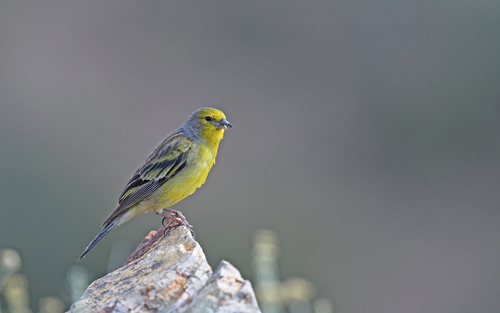
Citril Finch (Carduelis citrinella) Citril Finch
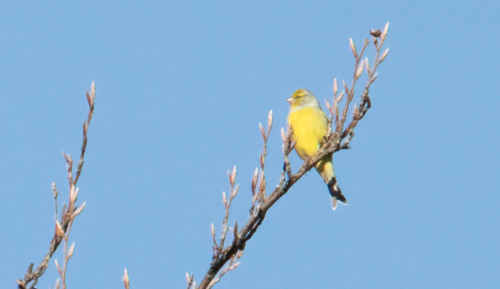
Corsican Finch (Carduelis corsicana) Corsican Finch

Media

Loading…

In short

The most reliable way to separate Citril Finch from Corsican Finch is by carefully checking the tone of the yellow on the underparts and face, and the color of the uppertail coverts: Citril Finch shows a brighter yellow with a faint greenish tinge and olive-toned uppertail coverts, while Corsican Finch has a duller, less greenish yellow and distinctly greyish uppertail coverts. Both species are very similar in size and structure, and both sexes can look alike, but subtle differences in back color and vocalizations can help. Juveniles of both are brownish, but the Corsican Finch's overall tones are duller and less green. Habitat and range are also useful: Citril Finch is found in mainland southwestern European mountains, while Corsican Finch is restricted to Corsica, Sardinia, and nearby islands.

Identification tips

  1. Check the yellow tone on the face and underparts: Citril Finch has a brighter yellow with a faint greenish tinge, while Corsican Finch is duller and lacks the greenish wash. This is most reliable in good light and on adult males.
  2. Uppertail coverts color: Citril Finch shows olive-toned uppertail coverts; Corsican Finch has greyish uppertail coverts. This is subtle but diagnostic if seen well.
  3. Back color and streaking: Both are brown-backed with dark streaks, but Corsican Finch is overall duller and browner; Citril Finch can appear slightly more greyish above.
  4. Double wing bars: Both species have yellow double wing bars, but these may be more prominent on Citril Finch. Not a strong separator, but worth checking in good views.
  5. Juvenile plumage: Juvenile Citril Finch is brown, lacking any yellow or green, while Corsican Finch juveniles are also brown and streaked, but even duller. In practice, separating juveniles is extremely difficult and unreliable in the field.
  6. Sex differences: Females of both species are duller than males, but Corsican Finch females are especially muted, with less yellow overall.
  7. Vocalizations: Listen for a longer, more structured song in Corsican Finch (sometimes wren-like), and a weaker, tremulous flight call. Citril Finch gives a silvery twitter and a 'tee-ee' call. These differences are subtle and best used as supporting evidence.
  8. Habitat and range: If you are on Corsica, Sardinia, or nearby islands, you are seeing Corsican Finch. In the Alps, Pyrenees, or other southwestern European mountains, it is Citril Finch. There is no natural overlap.
  9. Bill, tail, and structure: Both are small, compact finches with similar bills and tail shapes; structure is not a reliable separator.
  10. Flock composition: Both species may form small groups, especially outside the breeding season, but mixed flocks of the two do not occur due to non-overlapping ranges.
  11. Lighting pitfalls: Poor light can obscure the subtle greenish or greyish tones that separate these species; always try to view in good light and from multiple angles.
  12. Seasonal variation: Both species are resident and do not show strong seasonal plumage changes, though wear and molt can dull colors, especially in females and juveniles.
  13. Confusion with other finches: Juvenile Citril Finch lacks yellow or green, unlike European Serin or Siskin, but this does not help with Corsican Finch, which is similarly dull in youth.
  14. Use multiple features: No single field mark is always diagnostic; use a combination of yellow tone, uppertail coverts, back color, and (if possible) voice and location.
  15. Be cautious with dull birds: Females and juveniles are especially tricky. When in doubt, rely on range and context as much as plumage.

Size

Both species are nearly identical in size: Citril Finch averages 12 cm in length and 12.5 g in weight, while Corsican Finch ranges from 11.5–12.5 cm. In the field, size is not a reliable separator, as any difference is negligible and both are small, compact finches. Structure, including bill and tail, is also very similar between the two.

Plumage

For all ages, focus on the following:
- Adults: Citril Finch is greyish above with a brown-tinged, black-streaked back, and shows a bright yellow face and underparts with a faint greenish wash. Its uppertail coverts are olive-toned. Corsican Finch is also brown-backed with dark streaks, but the yellow on the face and underparts is less greenish and more subdued, and the uppertail coverts are distinctly greyish rather than olive.
- Females: Both are duller than males, but Corsican Finch females are particularly muted.
- Juveniles: Both are brown and streaked, but Citril Finch juveniles lack any yellow or green, while Corsican Finch juveniles are also brown and dull, with even less greenish or yellowish tint than adults.
- Wing pattern: No distinctive upperwing pattern differences are described for immatures or adults; both have double wing bars, but these are yellow and more prominent on Citril Finch.

Behaviour

Behavior is not highlighted as a separator in the sources. Both species are typical finches in their movements and feeding habits, and are likely to be seen in small flocks or pairs, foraging among trees or shrubs. Flight style and jizz are not noted as distinctive.

Habitat

Citril Finch is a resident breeder in the mountains of southwestern Europe, from Spain to the Alps, and is not found on Mediterranean islands. Corsican Finch is endemic to Corsica, Sardinia, and nearby small islands in France and Italy. If you are birding on Corsica or Sardinia, you are almost certainly seeing Corsican Finch; elsewhere in the Alps or Pyrenees, it will be Citril Finch. Overlap does not occur in the wild.

Voice

Both species have similar vocalizations, but there are subtle differences: Corsican Finch's flight call is weaker and more tremulous, and its song is longer and more structured, sometimes compared to the Eurasian Wren. Citril Finch's song is a silvery twitter, reminiscent of the European Goldfinch and European Serin, with a main call described as 'tee-ee', similar to Eurasian Siskin. These differences are subtle and may be hard to judge without experience.

Submit a better description

Use the same sections as the comparison. Your text is published immediately.

The most reliable way to separate Citril Finch from Corsican Finch is by carefully checking the tone of the yellow on the underparts and face, and the color of the uppertail coverts: Citril Finch shows a brighter yellow with a faint greenish tinge and olive-toned uppertail coverts, while Corsican Finch has a duller, less greenish yellow and distinctly greyish uppertail coverts. Both species are very similar in size and structure, and both sexes can look alike, but subtle differences in back color and vocalizations can help. Juveniles of both are brownish, but the Corsican Finch's overall tones are duller and less green. Habitat and range are also useful: Citril Finch is found in mainland southwestern European mountains, while Corsican Finch is restricted to Corsica, Sardinia, and nearby islands.

  1. Check the yellow tone on the face and underparts: Citril Finch has a brighter yellow with a faint greenish tinge, while Corsican Finch is duller and lacks the greenish wash. This is most reliable in good light and on adult males.
  2. Uppertail coverts color: Citril Finch shows olive-toned uppertail coverts; Corsican Finch has greyish uppertail coverts. This is subtle but diagnostic if seen well.
  3. Back color and streaking: Both are brown-backed with dark streaks, but Corsican Finch is overall duller and browner; Citril Finch can appear slightly more greyish above.
  4. Double wing bars: Both species have yellow double wing bars, but these may be more prominent on Citril Finch. Not a strong separator, but worth checking in good views.
  5. Juvenile plumage: Juvenile Citril Finch is brown, lacking any yellow or green, while Corsican Finch juveniles are also brown and streaked, but even duller. In practice, separating juveniles is extremely difficult and unreliable in the field.
  6. Sex differences: Females of both species are duller than males, but Corsican Finch females are especially muted, with less yellow overall.
  7. Vocalizations: Listen for a longer, more structured song in Corsican Finch (sometimes wren-like), and a weaker, tremulous flight call. Citril Finch gives a silvery twitter and a 'tee-ee' call. These differences are subtle and best used as supporting evidence.
  8. Habitat and range: If you are on Corsica, Sardinia, or nearby islands, you are seeing Corsican Finch. In the Alps, Pyrenees, or other southwestern European mountains, it is Citril Finch. There is no natural overlap.
  9. Bill, tail, and structure: Both are small, compact finches with similar bills and tail shapes; structure is not a reliable separator.
  10. Flock composition: Both species may form small groups, especially outside the breeding season, but mixed flocks of the two do not occur due to non-overlapping ranges.
  11. Lighting pitfalls: Poor light can obscure the subtle greenish or greyish tones that separate these species; always try to view in good light and from multiple angles.
  12. Seasonal variation: Both species are resident and do not show strong seasonal plumage changes, though wear and molt can dull colors, especially in females and juveniles.
  13. Confusion with other finches: Juvenile Citril Finch lacks yellow or green, unlike European Serin or Siskin, but this does not help with Corsican Finch, which is similarly dull in youth.
  14. Use multiple features: No single field mark is always diagnostic; use a combination of yellow tone, uppertail coverts, back color, and (if possible) voice and location.
  15. Be cautious with dull birds: Females and juveniles are especially tricky. When in doubt, rely on range and context as much as plumage.

Both species are nearly identical in size: Citril Finch averages 12 cm in length and 12.5 g in weight, while Corsican Finch ranges from 11.5–12.5 cm. In the field, size is not a reliable separator, as any difference is negligible and both are small, compact finches. Structure, including bill and tail, is also very similar between the two.

For all ages, focus on the following:
- Adults: Citril Finch is greyish above with a brown-tinged, black-streaked back, and shows a bright yellow face and underparts with a faint greenish wash. Its uppertail coverts are olive-toned. Corsican Finch is also brown-backed with dark streaks, but the yellow on the face and underparts is less greenish and more subdued, and the uppertail coverts are distinctly greyish rather than olive.
- Females: Both are duller than males, but Corsican Finch females are particularly muted.
- Juveniles: Both are brown and streaked, but Citril Finch juveniles lack any yellow or green, while Corsican Finch juveniles are also brown and dull, with even less greenish or yellowish tint than adults.
- Wing pattern: No distinctive upperwing pattern differences are described for immatures or adults; both have double wing bars, but these are yellow and more prominent on Citril Finch.

Behavior is not highlighted as a separator in the sources. Both species are typical finches in their movements and feeding habits, and are likely to be seen in small flocks or pairs, foraging among trees or shrubs. Flight style and jizz are not noted as distinctive.

Citril Finch is a resident breeder in the mountains of southwestern Europe, from Spain to the Alps, and is not found on Mediterranean islands. Corsican Finch is endemic to Corsica, Sardinia, and nearby small islands in France and Italy. If you are birding on Corsica or Sardinia, you are almost certainly seeing Corsican Finch; elsewhere in the Alps or Pyrenees, it will be Citril Finch. Overlap does not occur in the wild.

Both species have similar vocalizations, but there are subtle differences: Corsican Finch's flight call is weaker and more tremulous, and its song is longer and more structured, sometimes compared to the Eurasian Wren. Citril Finch's song is a silvery twitter, reminiscent of the European Goldfinch and European Serin, with a main call described as 'tee-ee', similar to Eurasian Siskin. These differences are subtle and may be hard to judge without experience.

Discard your changes?

You have unsaved edits. If you leave now, those changes will be lost.

Citril Finch · Corsican Finch · My Tricky Birds