
Citrine Wagtail vs Pied Wagtail/White Wagtail
Motacilla citreola versus Motacilla alba
Play a quiz with Citrine Wagtail and Pied Wagtail/White Wagtail
 Citrine Wagtail
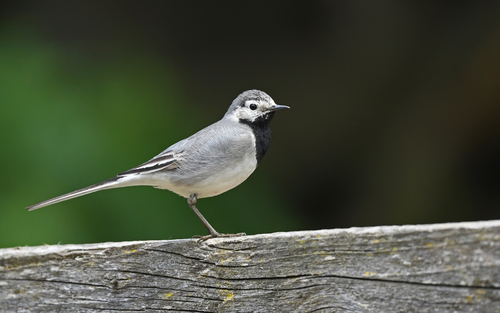 Pied Wagtail/White Wagtail
In short
The most reliable field mark between Citrine Wagtail and Pied/White Wagtail is the head and underpart color in breeding adults: Citrine Wagtail males show a bright yellow head and underparts, while Pied/White Wagtail males have a white or pale face and throat with black, grey, or dark upperparts depending on subspecies and season. In non-breeding and immature plumages, separation is more challenging, but Citrine Wagtail typically retains some yellow on the face and underparts, whereas Pied/White Wagtail juveniles and females are generally grey, black, and white without yellow tones. Both species are slender, long-tailed, and similar in size and structure, so careful attention to plumage details—especially the presence or absence of yellow—is essential. Flight and perched views can both be useful, but beware of washed-out or transitional plumages.
Identification tips
- Bright yellow head and underparts (breeding male): Only Citrine Wagtail shows a fully yellow head and underparts in breeding plumage. Pied/White Wagtail never shows yellow.
- Yellow tones in non-breeding and immature birds: Even in winter or immature Citrine Wagtails, look for yellowish wash on the face (especially supercilium) and underparts. Pied/White Wagtail is always grey, black, and white—never yellow.
- Head pattern (all seasons): Citrine Wagtail has a yellow head (breeding male) or at least a yellowish supercilium (other ages/seasons). Pied/White Wagtail has a white or pale face, with black or grey crown and nape, and no yellow.
- Back color (breeding males): Citrine Wagtail is grey or black above, with a sharp contrast to the yellow head and underparts. Pied/White Wagtail (especially 'Pied' subspecies) can be black-backed (M. a. yarrellii) or grey-backed (nominate), but always with white face and underparts.
- Wing pattern: Both show white in the remiges, but this is not a strong separator. Focus on head and underpart color.
- Sex and age variation: Female and immature Citrine Wagtails are paler but usually retain some yellow. Female and immature Pied/White Wagtails are grey and white, lacking yellow.
- Tail pattern: Both have long, wagging tails with white edges. Not a separator.
- Flight views: In flight, both show white outer tail feathers and white in the wing, but Citrine may show yellowish underparts. Pied/White Wagtail is always white below.
- Habitat context: In western Europe, Pied/White Wagtail is vastly more common. Citrine is a rare vagrant—consider location and season.
- Subspecies confusion: Some Pied/White Wagtail subspecies (e.g., 'Pied Wagtail' M. a. yarrellii) are darker above, but still lack yellow. Do not confuse dark-backed Pied Wagtails with Citrine.
- Seasonal molt: Both species become duller in winter, but only Citrine retains yellowish tones.
- Bill and structure: Both are slender with similar bills and structure; do not rely on shape for separation.
- Behavior: Both wag their tails and feed in similar ways. Behavior is not a separator.
- Voice: Not described in the notes; do not use for separation.
- Pitfalls: Washed-out or worn Citrine Wagtails can look pale, but even faint yellow is diagnostic. Never count on yellow in Pied/White Wagtail.
Size
Both species are very close in size and structure, with Citrine Wagtail measuring about 15.5–17 cm in length [wikipedia], and Pied/White Wagtail falling within a similar range. Both are slender with long, constantly wagging tails, and neither species is reliably separated by size or proportions in the field. Bill length and shape are similar, and both have a delicate, streamlined look typical of Motacilla wagtails.
Plumage
-
Juvenile and first-winter plumage: Juvenile and immature Citrine Wagtails are generally duller than adults but often show some yellowish wash on the face or underparts, even in winter. Females are paler, resembling washed-out males, but still may show yellowish tones. Pied/White Wagtail juveniles and females lack yellow entirely, instead showing grey, black, and white patterns. The British 'Pied Wagtail' (M. a. yarrellii) is darker above, while other subspecies are paler grey.
-
Adult breeding plumage: Male Citrine Wagtail is strikingly yellow on the head and underparts, with a black or greyish back and white in the wings. Pied/White Wagtail males have a white or pale face and throat, black or dark grey back (depending on subspecies), and white underparts. The head pattern is a key difference: Citrine Wagtail's head is almost entirely yellow, while Pied/White Wagtail's is white with black or grey crown and nape.
-
Adult non-breeding plumage: Citrine Wagtail's yellow is reduced but usually still visible, especially as a yellowish supercilium and some yellow on the underparts. Pied/White Wagtail becomes paler, with more grey tones replacing black, but never develops yellow. Both can look drab and washed out in winter, but yellow tones are a strong indicator of Citrine.
Behaviour
Both species share similar wagtail behavior: they are active, ground-feeding insectivores, constantly wagging their long tails. Both can be seen walking or running on open ground, often near water. Flight is undulating and direct, with both species showing white in the outer tail. There are no strong behavioral differences to separate them in the field.
Habitat
Citrine Wagtail breeds in wet meadows and tundra across the central Palearctic, and winters in South Asia, often in highland areas. It is a rare but increasing vagrant in western Europe. Pied/White Wagtail is much more widespread, breeding across most of Europe, Asia, and parts of North Africa, and wintering in Africa and southern Asia. Both species can be found near water, but Pied/White Wagtail is much more likely in urban or human-modified habitats, while Citrine prefers wetter, more open areas during breeding. In wintering grounds, both may overlap, but Pied/White Wagtail is far more common.
Citrine Wagtail · Pied Wagtail/White Wagtail · My Tricky Birds