
Clapper Rail vs American Coot
Rallus crepitans versus Fulica americana
Play a quiz with Clapper Rail and American Coot
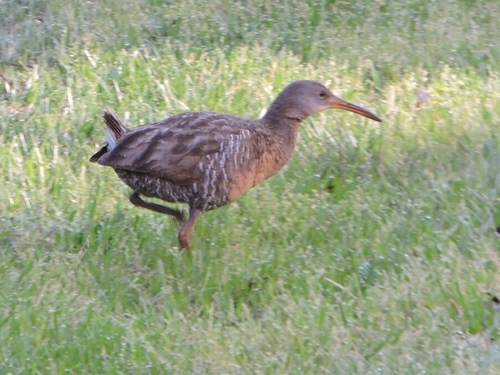
Clapper Rail
American Coot
In short
The Clapper Rail and American Coot can be distinguished primarily by their habitat preferences and bill characteristics. Clapper Rails have a long, slightly curved bill and are typically found in salt marshes, while American Coots have a short, white bill with a frontal shield and are more often seen in freshwater habitats.
Identification tips
- Bill Shape: Clapper Rail has a long, slightly curved bill; American Coot has a short, white bill with a frontal shield. 2. Habitat: Look for Clapper Rails in salt marshes and American Coots in freshwater environments. 3. Plumage: Note the uniform brownish-gray of Clapper Rail versus the dark gray and black head of the American Coot. 4. Behavior: Clapper Rail is secretive, while American Coot is often seen swimming in open water.
Size
Both species are medium-sized birds, but the American Coot appears more robust and chicken-like compared to the slimmer Clapper Rail.
Plumage
Clapper Rails have a more uniformly brownish-gray plumage with a slightly paler throat and belly, whereas American Coots are dark gray with a distinctive black head and neck.
Behaviour
Clapper Rails are secretive and often seen skulking in dense marsh vegetation, whereas American Coots are more visible, often seen swimming in open water and forming large rafts.
Habitat
Clapper Rails prefer salt marshes and coastal wetlands, while American Coots are found in a variety of freshwater habitats, including lakes, ponds, and marshes.
Voice
Clapper Rails are known for their loud, clattering calls, which are often heard rather than seen. American Coots are vocal with a variety of cackling and grunting calls.