Birdr

Clapper Rail vs Virginia Rail

Rallus crepitans versus Rallus limicola

Play a quiz with Clapper Rail and Virginia Rail
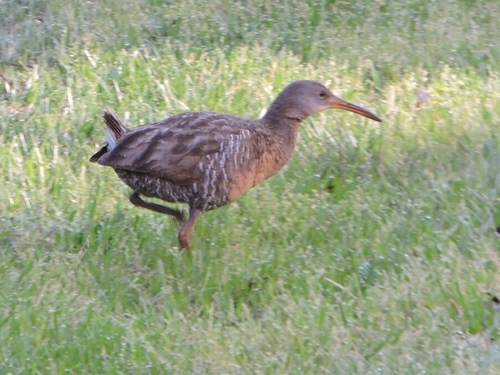
Clapper Rail (Rallus crepitans) Clapper Rail
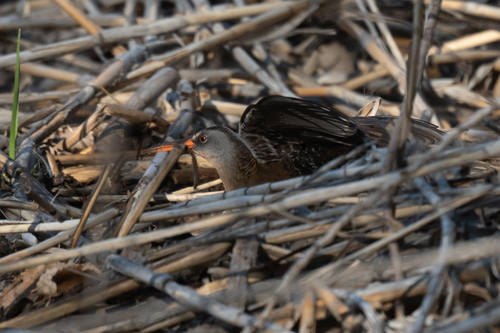
Virginia Rail (Rallus limicola) Virginia Rail

Media

Loading…

In short

The Clapper Rail and Virginia Rail are both marsh-dwelling birds with similar body shapes, but they can be distinguished by size, habitat preference, and vocalizations. Clapper Rails are larger and more likely found in saltwater marshes, while Virginia Rails are smaller and prefer freshwater marshes.

Identification tips

  1. Size: Look for the larger size of the Clapper Rail. 2. Habitat: Note the type of marsh; Clapper Rails in saltwater, Virginia Rails in freshwater. 3. Vocalizations: Listen for the Clapper Rail's clattering call versus the Virginia Rail's 'kidik-kidik'. 4. Plumage: Check for the Clapper Rail's grayer tones compared to the Virginia Rail's rufous breast.

Size

Clapper Rail is larger, typically around 32-41 cm in length, whereas the Virginia Rail is smaller, about 20-27 cm.

Plumage

Both species have similar brownish plumage, but the Clapper Rail tends to have a paler, grayer tone overall, while the Virginia Rail has a richer, more rufous coloration on the breast and flanks.

Behaviour

Both species are secretive and often seen skulking in dense vegetation. Virginia Rails are more likely to be seen running or swimming to escape danger, while Clapper Rails are more likely to be heard than seen.

Habitat

Clapper Rails are typically found in saltwater marshes along the coasts, whereas Virginia Rails prefer freshwater marshes and are more widespread across North America.

Voice

Clapper Rails are known for their loud, clattering calls, which are often heard in their coastal habitats. Virginia Rails have a distinctive 'kidik-kidik' call, which can be heard in their freshwater marsh habitats.

Submit a better description

Use the same sections as the comparison. Your text is published immediately.

The Clapper Rail and Virginia Rail are both marsh-dwelling birds with similar body shapes, but they can be distinguished by size, habitat preference, and vocalizations. Clapper Rails are larger and more likely found in saltwater marshes, while Virginia Rails are smaller and prefer freshwater marshes.

  1. Size: Look for the larger size of the Clapper Rail. 2. Habitat: Note the type of marsh; Clapper Rails in saltwater, Virginia Rails in freshwater. 3. Vocalizations: Listen for the Clapper Rail's clattering call versus the Virginia Rail's 'kidik-kidik'. 4. Plumage: Check for the Clapper Rail's grayer tones compared to the Virginia Rail's rufous breast.

Clapper Rail is larger, typically around 32-41 cm in length, whereas the Virginia Rail is smaller, about 20-27 cm.

Both species have similar brownish plumage, but the Clapper Rail tends to have a paler, grayer tone overall, while the Virginia Rail has a richer, more rufous coloration on the breast and flanks.

Both species are secretive and often seen skulking in dense vegetation. Virginia Rails are more likely to be seen running or swimming to escape danger, while Clapper Rails are more likely to be heard than seen.

Clapper Rails are typically found in saltwater marshes along the coasts, whereas Virginia Rails prefer freshwater marshes and are more widespread across North America.

Clapper Rails are known for their loud, clattering calls, which are often heard in their coastal habitats. Virginia Rails have a distinctive 'kidik-kidik' call, which can be heard in their freshwater marsh habitats.

Discard your changes?

You have unsaved edits. If you leave now, those changes will be lost.

Clapper Rail · Virginia Rail · My Tricky Birds