Birdr

Cliff Swallow vs Cave Swallow

Petrochelidon pyrrhonota versus Petrochelidon fulva

Play a quiz with Cliff Swallow and Cave Swallow
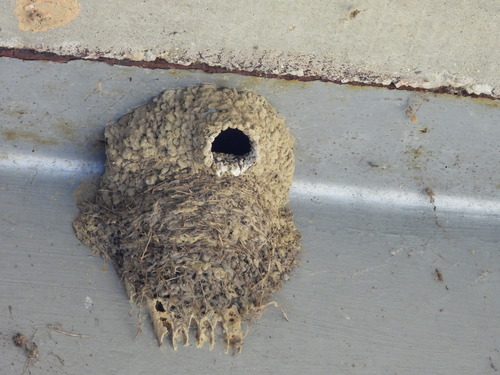
Cliff Swallow (Petrochelidon pyrrhonota) Cliff Swallow
Cave Swallow (Petrochelidon fulva) Cave Swallow

Media

Loading…

In short

Cliff Swallows and Cave Swallows are similar in appearance but can be distinguished by their plumage and structural differences. The most reliable field mark is the presence of a pale forehead on the Cliff Swallow, contrasting with the dark forehead of the Cave Swallow. Both species are often found in colonies, but their preferred habitats can differ.

Identification tips

  1. Look for the pale forehead on Cliff Swallows, which is absent in Cave Swallows. 2. Observe the throat color: darker in Cliff Swallows, paler in Cave Swallows. 3. Check the rump color: pale in Cliff Swallows, more uniform in Cave Swallows. 4. Consider the habitat: Cliff Swallows are more likely near cliffs and bridges, Cave Swallows near caves. 5. Note that vocalizations are not a reliable distinguishing feature.

Size

Both species are similar in size, typical of swallows, with no significant difference in overall body length or wingspan.

Plumage

Cliff Swallows have a pale, buffy or whitish forehead and a dark throat, while Cave Swallows have a dark forehead and a paler throat. The rump of the Cliff Swallow is pale, often buffy, contrasting with the darker back, whereas the Cave Swallow has a more uniform back and rump coloration.

Behaviour

Both species exhibit colonial nesting behavior, often building mud nests on man-made structures. Cliff Swallows are known for their brood-parasitism behavior, which is not observed in Cave Swallows.

Habitat

Cliff Swallows are often found in open areas near water, cliffs, and bridges, while Cave Swallows are more commonly associated with caves and sinkholes, particularly in the southern parts of their range.

Voice

Both species have similar calls, consisting of a series of chirps and squeaks, making vocalization a less reliable distinguishing feature.

Submit a better description

Use the same sections as the comparison. Your text is published immediately.

Cliff Swallows and Cave Swallows are similar in appearance but can be distinguished by their plumage and structural differences. The most reliable field mark is the presence of a pale forehead on the Cliff Swallow, contrasting with the dark forehead of the Cave Swallow. Both species are often found in colonies, but their preferred habitats can differ.

  1. Look for the pale forehead on Cliff Swallows, which is absent in Cave Swallows. 2. Observe the throat color: darker in Cliff Swallows, paler in Cave Swallows. 3. Check the rump color: pale in Cliff Swallows, more uniform in Cave Swallows. 4. Consider the habitat: Cliff Swallows are more likely near cliffs and bridges, Cave Swallows near caves. 5. Note that vocalizations are not a reliable distinguishing feature.

Both species are similar in size, typical of swallows, with no significant difference in overall body length or wingspan.

Cliff Swallows have a pale, buffy or whitish forehead and a dark throat, while Cave Swallows have a dark forehead and a paler throat. The rump of the Cliff Swallow is pale, often buffy, contrasting with the darker back, whereas the Cave Swallow has a more uniform back and rump coloration.

Both species exhibit colonial nesting behavior, often building mud nests on man-made structures. Cliff Swallows are known for their brood-parasitism behavior, which is not observed in Cave Swallows.

Cliff Swallows are often found in open areas near water, cliffs, and bridges, while Cave Swallows are more commonly associated with caves and sinkholes, particularly in the southern parts of their range.

Both species have similar calls, consisting of a series of chirps and squeaks, making vocalization a less reliable distinguishing feature.

Discard your changes?

You have unsaved edits. If you leave now, those changes will be lost.

Cliff Swallow · Cave Swallow · My Tricky Birds