Cock-tailed Tyrant vs Sibilant Sirystes
Alectrurus tricolor versus Sirystes sibilator
Play a quiz with Cock-tailed Tyrant and Sibilant Sirystes
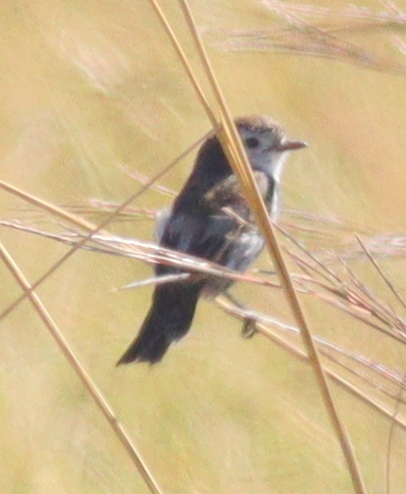
Cock-tailed Tyrant
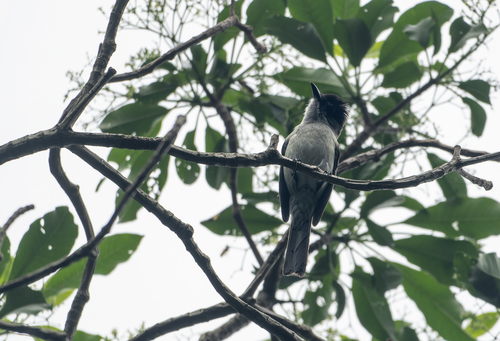
Sibilant Sirystes
In short
The Cock-tailed Tyrant and Sibilant Sirystes can be distinguished by their tails and plumage. The male Cock-tailed Tyrant has a unique tail with elongated central feathers, while the Sibilant Sirystes lacks this feature and has a more uniform tail. Plumage differences include the Cock-tailed Tyrant's black and white coloration versus the Sibilant Sirystes' gray and black tones.
Identification tips
1. Tail: Look for the Cock-tailed Tyrant's distinctive long central tail feathers in males. 2. Plumage: Note the Cock-tailed Tyrant's black and white contrast versus the Sibilant Sirystes' gray and black tones. 3. Habitat: Consider the habitat; Cock-tailed Tyrants prefer open grasslands, while Sibilant Sirystes are more forest-associated. 4. Vocalization: Listen for the Sibilant Sirystes' chattering song.
Size
Both species are small flycatchers, but the Cock-tailed Tyrant may appear more striking due to its unique tail structure.
Plumage
The male Cock-tailed Tyrant is mainly black with a gray rump and white shoulder patch, while the Sibilant Sirystes is gray above with a black crown, wings, and tail, and white edging on the wing coverts and secondaries. The female Cock-tailed Tyrant is brown with whitish underparts.
Behaviour
The Cock-tailed Tyrant is often seen in open grasslands, while the Sibilant Sirystes may be found in forested areas. Both species are flycatchers but differ in their preferred habitats.
Habitat
The Cock-tailed Tyrant is found in southern Brazil, Bolivia, and Paraguay, primarily in protected areas. The Sibilant Sirystes occurs in central and eastern South America, including northeastern Argentina and southern Brazil, often in forested regions.
Voice
The Sibilant Sirystes has a chattering song, distinct from the Cock-tailed Tyrant, whose vocalizations are not well-documented in the provided sources.