Birdr

Collared Babbler vs Rufous-throated Fulvetta

Gampsorhynchus torquatus versus Schoeniparus rufogularis

Play a quiz with Collared Babbler and Rufous-throated Fulvetta
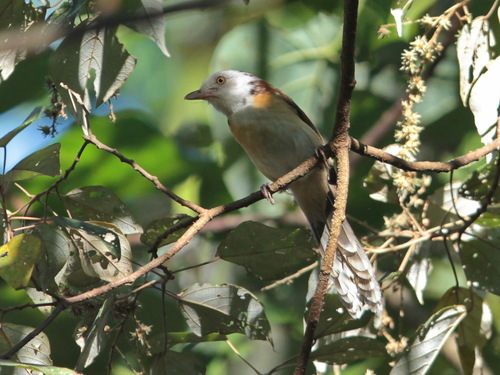
Collared Babbler (Gampsorhynchus torquatus) Collared Babbler
Rufous-throated Fulvetta (Schoeniparus rufogularis) Rufous-throated Fulvetta

Media

Loading…

In short

The Collared Babbler and Rufous-throated Fulvetta can be distinguished by their throat and collar markings. The Collared Babbler has a distinctive white collar and throat, while the Rufous-throated Fulvetta features a rufous throat patch. Both species are small, active birds found in similar habitats, but their vocalizations and specific plumage details help in identification.

Identification tips

  1. Look for the white collar and throat in the Collared Babbler. 2. Note the rufous throat patch in the Rufous-throated Fulvetta. 3. Listen for differences in song complexity. 4. Observe in mixed-species flocks for better comparison. 5. Be aware of overlapping habitats, focusing on throat and collar markings for identification.

Size

Both species are small, with the Rufous-throated Fulvetta being slightly more compact.

Plumage

The Collared Babbler has a white throat and collar, contrasting with its darker upperparts. In contrast, the Rufous-throated Fulvetta has a rufous throat patch and lacks the distinct white collar, with more uniform brownish upperparts.

Behaviour

Both species are active and often found in mixed-species flocks, but specific behavioral differences are not well-documented.

Habitat

Both species inhabit forested areas, often in the undergrowth or mid-story, but specific habitat preferences may overlap significantly.

Voice

Vocalizations differ, with the Collared Babbler having a more varied and complex song compared to the simpler calls of the Rufous-throated Fulvetta.

Submit a better description

Use the same sections as the comparison. Your text is published immediately.

The Collared Babbler and Rufous-throated Fulvetta can be distinguished by their throat and collar markings. The Collared Babbler has a distinctive white collar and throat, while the Rufous-throated Fulvetta features a rufous throat patch. Both species are small, active birds found in similar habitats, but their vocalizations and specific plumage details help in identification.

  1. Look for the white collar and throat in the Collared Babbler. 2. Note the rufous throat patch in the Rufous-throated Fulvetta. 3. Listen for differences in song complexity. 4. Observe in mixed-species flocks for better comparison. 5. Be aware of overlapping habitats, focusing on throat and collar markings for identification.

Both species are small, with the Rufous-throated Fulvetta being slightly more compact.

The Collared Babbler has a white throat and collar, contrasting with its darker upperparts. In contrast, the Rufous-throated Fulvetta has a rufous throat patch and lacks the distinct white collar, with more uniform brownish upperparts.

Both species are active and often found in mixed-species flocks, but specific behavioral differences are not well-documented.

Both species inhabit forested areas, often in the undergrowth or mid-story, but specific habitat preferences may overlap significantly.

Vocalizations differ, with the Collared Babbler having a more varied and complex song compared to the simpler calls of the Rufous-throated Fulvetta.

Discard your changes?

You have unsaved edits. If you leave now, those changes will be lost.

Collared Babbler · Rufous-throated Fulvetta · My Tricky Birds