
Birdr

Collared Dove vs Common Starling

Streptopelia decaocto versus Sturnus vulgaris

Play a quiz with Collared Dove and Common Starling
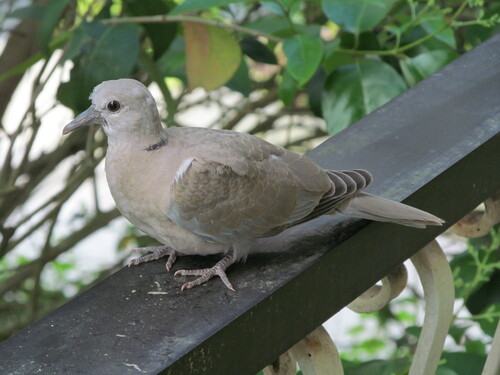
Collared Dove (Streptopelia decaocto) Collared Dove
Common Starling (Sturnus vulgaris) Common Starling

Media

Loading…

In short

The Eurasian Collared-Dove and Common Starling are distinct in both structure and behavior. The Collared-Dove is a medium-sized dove with a slender body and a distinctive black 'collar' on its neck, while the Starling is a smaller, stockier bird with iridescent plumage and a short tail. Both species are adaptable to urban environments, but their vocalizations and flight patterns differ significantly.

Identification tips

Size

The Eurasian Collared-Dove is larger and more slender than the Common Starling, which is smaller and more compact.

Plumage

The Collared-Dove has a pale gray body with a black neck collar, while the Starling has dark, iridescent plumage that can appear speckled, especially in winter.

Behaviour

Collared-Doves often perch in open areas and have a graceful, steady flight. Starlings are more gregarious, often seen in large flocks, and have a more direct, rapid flight.

Habitat

Both species are highly adaptable and commonly found in urban and suburban areas, but Collared-Doves are more likely to be seen perched on wires or in open spaces, while Starlings are often foraging on the ground or in trees.

Voice

The Collared-Dove has a distinctive, repetitive cooing sound, whereas the Starling is known for its varied and complex vocalizations, which can include mimicry of other birds and sounds.

Submit a better description

Use the same sections as the comparison. Your text is published immediately.

The Eurasian Collared-Dove and Common Starling are distinct in both structure and behavior. The Collared-Dove is a medium-sized dove with a slender body and a distinctive black 'collar' on its neck, while the Starling is a smaller, stockier bird with iridescent plumage and a short tail. Both species are adaptable to urban environments, but their vocalizations and flight patterns differ significantly.

  • Look for the black collar on the Eurasian Collared-Dove's neck.
  • Note the iridescent plumage of the Common Starling, especially in good light.
  • Listen for the repetitive cooing of the Collared-Dove versus the Starling's complex and varied songs.
  • Observe the flight pattern: Collared-Doves have a more graceful, steady flight compared to the Starling's rapid, direct flight.
  • Consider the context: Starlings are often in flocks, while Collared-Doves are more solitary or in pairs.

The Eurasian Collared-Dove is larger and more slender than the Common Starling, which is smaller and more compact.

The Collared-Dove has a pale gray body with a black neck collar, while the Starling has dark, iridescent plumage that can appear speckled, especially in winter.

Collared-Doves often perch in open areas and have a graceful, steady flight. Starlings are more gregarious, often seen in large flocks, and have a more direct, rapid flight.

Both species are highly adaptable and commonly found in urban and suburban areas, but Collared-Doves are more likely to be seen perched on wires or in open spaces, while Starlings are often foraging on the ground or in trees.

The Collared-Dove has a distinctive, repetitive cooing sound, whereas the Starling is known for its varied and complex vocalizations, which can include mimicry of other birds and sounds.

Discard your changes?

You have unsaved edits. If you leave now, those changes will be lost.

Collared Dove · Common Starling · My Tricky Birds