Birdr

Collared Palm-Thrush vs White-starred Robin

Cichladusa arquata versus Pogonocichla stellata

Play a quiz with Collared Palm-Thrush and White-starred Robin
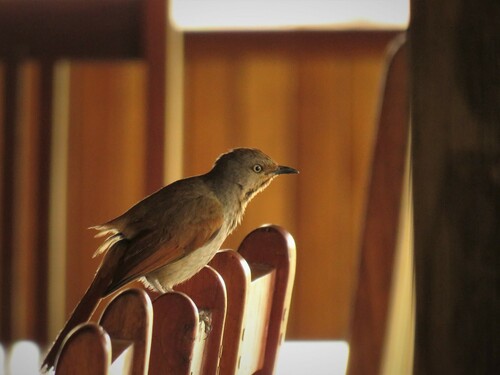
Collared Palm-Thrush (Cichladusa arquata) Collared Palm-Thrush
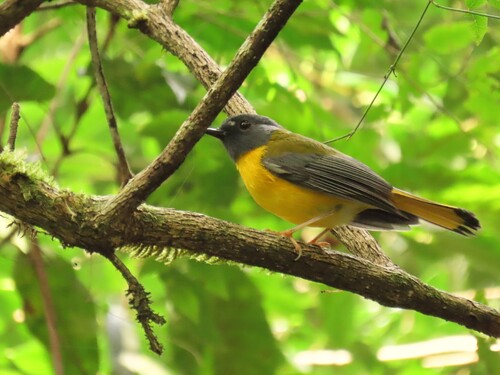
White-starred Robin (Pogonocichla stellata) White-starred Robin

Media

Loading…

In short

The Collared Palm-Thrush and White-starred Robin are both small, insectivorous birds of the Old World Flycatchers family. The Collared Palm-Thrush is best identified by its distinctive white collar and preference for open, palm-dominated habitats, while the White-starred Robin is notable for its white spots on the throat and chest and its affinity for forested areas.

Identification tips

Size

Both species are small, but the White-starred Robin tends to appear slightly more compact due to its shorter tail.

Plumage

The Collared Palm-Thrush has a prominent white collar and a generally paler appearance, whereas the White-starred Robin features distinctive white spots on its throat and chest set against a darker, more uniform plumage.

Behaviour

The Collared Palm-Thrush is often seen foraging on the ground or low in vegetation, while the White-starred Robin is more likely to be found flitting through the undergrowth or lower canopy.

Habitat

The Collared Palm-Thrush prefers open areas with palms, often near human habitation, while the White-starred Robin is typically found in dense, moist forests or forest edges.

Voice

Both species have melodious songs, but the White-starred Robin's song is more varied and complex. Specific vocal differences are subtle and may require experience to distinguish reliably.

Submit a better description

Use the same sections as the comparison. Your text is published immediately.

The Collared Palm-Thrush and White-starred Robin are both small, insectivorous birds of the Old World Flycatchers family. The Collared Palm-Thrush is best identified by its distinctive white collar and preference for open, palm-dominated habitats, while the White-starred Robin is notable for its white spots on the throat and chest and its affinity for forested areas.

  • Look for the white collar on the Collared Palm-Thrush, especially in open, palm-rich areas.
  • Note the white throat and chest spots on the White-starred Robin, particularly in forested habitats.
  • Observe behavior: ground foraging suggests Collared Palm-Thrush, while more arboreal activity suggests White-starred Robin.
  • Listen for song differences: the White-starred Robin's song is more varied.

Both species are small, but the White-starred Robin tends to appear slightly more compact due to its shorter tail.

The Collared Palm-Thrush has a prominent white collar and a generally paler appearance, whereas the White-starred Robin features distinctive white spots on its throat and chest set against a darker, more uniform plumage.

The Collared Palm-Thrush is often seen foraging on the ground or low in vegetation, while the White-starred Robin is more likely to be found flitting through the undergrowth or lower canopy.

The Collared Palm-Thrush prefers open areas with palms, often near human habitation, while the White-starred Robin is typically found in dense, moist forests or forest edges.

Both species have melodious songs, but the White-starred Robin's song is more varied and complex. Specific vocal differences are subtle and may require experience to distinguish reliably.

Discard your changes?

You have unsaved edits. If you leave now, those changes will be lost.

Collared Palm-Thrush · White-starred Robin · My Tricky Birds