Birdr

Collared Scops Owl vs Oriental Scops Owl

Otus lettia versus Otus sunia

Play a quiz with Collared Scops Owl and Oriental Scops Owl
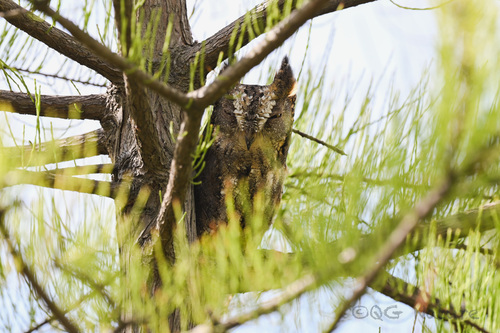
Collared Scops Owl (Otus lettia) Collared Scops Owl
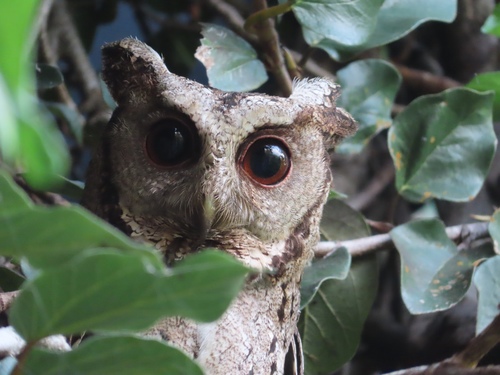
Oriental Scops Owl (Otus sunia) Oriental Scops Owl

Media

Loading…

In short

The Collared Scops Owl (Otus lettia) and Oriental Scops Owl (Otus sunia) are small, similar-looking owls often found in overlapping ranges. Key differences include their vocalizations and subtle plumage variations. Observers should focus on these distinctions for accurate identification.

Identification tips

Size

Both species are similar in size, but the Collared Scops Owl is slightly larger and bulkier.

Plumage

The Collared Scops Owl typically has a more pronounced collar and a paler facial disc compared to the Oriental Scops Owl. The Oriental Scops Owl often exhibits more rufous tones, especially in its morphs, and has a less distinct collar.

Behaviour

Both species are nocturnal and can be seen roosting during the day. They exhibit similar hunting behaviors, primarily feeding on insects and small vertebrates.

Habitat

Both species inhabit a variety of wooded areas, but the Oriental Scops Owl is more adaptable to drier and more open habitats compared to the Collared Scops Owl, which prefers denser forests.

Voice

The Collared Scops Owl has a distinctive, repetitive 'hoot' call, while the Oriental Scops Owl's call is a series of softer, more rapid notes. Listening for these differences is crucial for identification.

Submit a better description

Use the same sections as the comparison. Your text is published immediately.

The Collared Scops Owl (Otus lettia) and Oriental Scops Owl (Otus sunia) are small, similar-looking owls often found in overlapping ranges. Key differences include their vocalizations and subtle plumage variations. Observers should focus on these distinctions for accurate identification.

  • Listen for calls: Collared Scops Owl has a repetitive 'hoot'; Oriental Scops Owl has softer, rapid notes.
  • Look for plumage details: Collared Scops Owl has a more pronounced collar and paler facial disc.
  • Consider habitat: Oriental Scops Owl is more likely in drier, open areas.

Both species are similar in size, but the Collared Scops Owl is slightly larger and bulkier.

The Collared Scops Owl typically has a more pronounced collar and a paler facial disc compared to the Oriental Scops Owl. The Oriental Scops Owl often exhibits more rufous tones, especially in its morphs, and has a less distinct collar.

Both species are nocturnal and can be seen roosting during the day. They exhibit similar hunting behaviors, primarily feeding on insects and small vertebrates.

Both species inhabit a variety of wooded areas, but the Oriental Scops Owl is more adaptable to drier and more open habitats compared to the Collared Scops Owl, which prefers denser forests.

The Collared Scops Owl has a distinctive, repetitive 'hoot' call, while the Oriental Scops Owl's call is a series of softer, more rapid notes. Listening for these differences is crucial for identification.

Discard your changes?

You have unsaved edits. If you leave now, those changes will be lost.

Collared Scops Owl · Oriental Scops Owl · My Tricky Birds