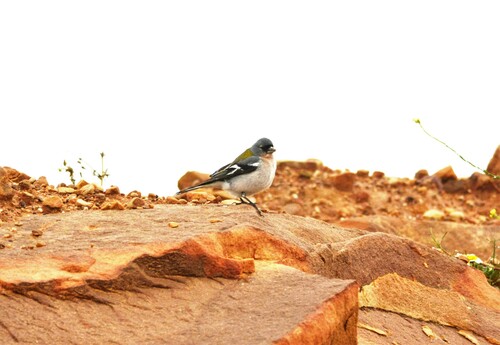
Common Chaffinch vs African Chaffinch
Fringilla coelebs versus Fringilla spodiogenys
Play a quiz with Common Chaffinch and African Chaffinch
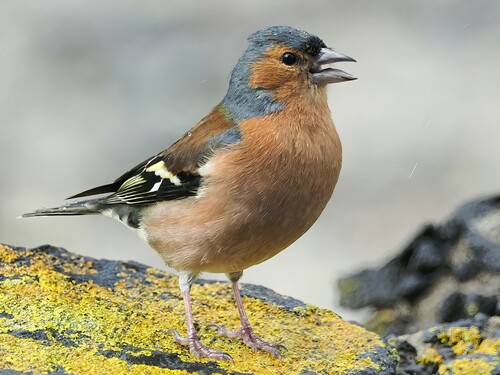
Common Chaffinch
African Chaffinch
In short
The Common Chaffinch and African Chaffinch are closely related, but can be distinguished by their plumage and habitat preferences. The Common Chaffinch has a more widespread range across the Palearctic, while the African Chaffinch is found in North Africa. Both species exhibit similar structures, but their plumage and vocalizations offer clues for identification.
Identification tips
- Plumage: Look for the bright slate-blue crown and pinkish-rust underparts in male Common Chaffinches. African Chaffinches are generally more muted. 2. Habitat: Consider the location; Common Chaffinches are widespread across the Palearctic, while African Chaffinches are restricted to North Africa. 3. Vocalizations: Listen for the Common Chaffinch's descending song and 'rain call,' which are distinctive.
Size
Both species are similar in size, typical of small finches, with no significant size difference to aid in field identification.
Plumage
Breeding male Common Chaffinches have a slate-blue crown and pinkish-rust underparts, with bold white wingbars. Females are olive-brown. African Chaffinches generally have a more muted coloration, lacking the bright contrasts of the Common Chaffinch. The African Chaffinch's plumage is less documented, but it is generally less vibrant.
Behaviour
Both species exhibit similar finch-like behaviors, including foraging habits and song learning. The Common Chaffinch is notable for its culturally transmitted song dialects.
Habitat
Common Chaffinches occupy a wide range of wooded habitats from ancient forests to suburban gardens across the Palearctic. African Chaffinches prefer lowland and lower montane woodlands in North Africa, often in beech, hornbeam, oak, spruce, and pine areas.
Voice
The Common Chaffinch is known for its distinctive descending song and regionally varying 'rain call.' The African Chaffinch's vocalizations are less documented but are expected to differ slightly due to geographic separation.