Birdr

Common Crossbill vs European Goldfinch

Loxia curvirostra versus Carduelis carduelis

Play a quiz with Common Crossbill and European Goldfinch
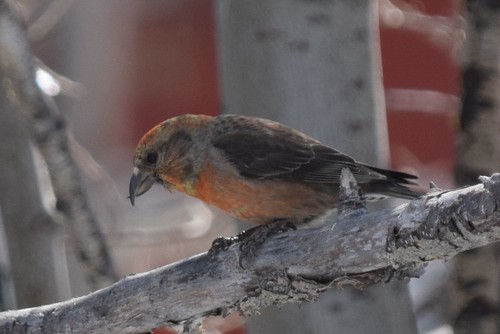
Common Crossbill (Loxia curvirostra) Common Crossbill
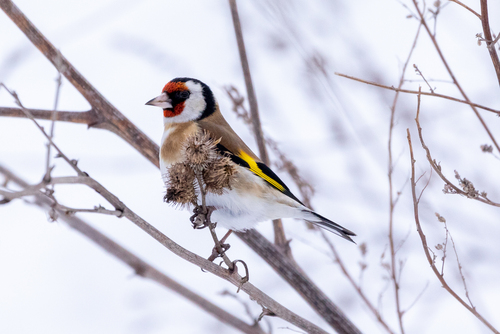
European Goldfinch (Carduelis carduelis) European Goldfinch

Media

Loading…

In short

The Common Crossbill and the European Goldfinch are both finches but are easily distinguished by their bills and plumage. The Crossbill has a distinctive crossed bill adapted for extracting seeds from conifer cones, while the Goldfinch has a slender, pointed bill suited for picking seeds. In terms of plumage, the Goldfinch is unmistakable with its bright red face and gold wingbars.

Identification tips

1. Bill Shape: Look for the distinctive crossed bill of the Common Crossbill versus the slender, pointed bill of the European Goldfinch. 2. Plumage: Note the red face and gold wingbars of the Goldfinch compared to the more uniform coloration of the Crossbill. 3. Habitat: Consider the habitat; Crossbills are more likely in coniferous forests, while Goldfinches prefer open, mixed habitats. 4. Behavior: Observe flocking behavior; Goldfinches are more gregarious and often seen in larger flocks.

Size

Both species are similar in size, but the Common Crossbill is generally more robust and stockier compared to the slender European Goldfinch.

Plumage

The Common Crossbill has a more subdued plumage with males typically red or orange and females greenish or yellowish. The European Goldfinch is striking with a red face, black and white head, and bright gold wingbars.

Behaviour

Common Crossbills are often found in coniferous forests and are less gregarious than Goldfinches. European Goldfinches are highly social, often seen in flocks, and can be found in a variety of open habitats.

Habitat

Common Crossbills are typically found in coniferous forests, while European Goldfinches prefer open areas, gardens, and orchards, avoiding dense forests.

Voice

Common Crossbills have a variety of call types often associated with specific conifer species, while European Goldfinches have a distinctive, pleasant, tinkling song.

Submit a better description

Use the same sections as the comparison. Your text is published immediately.

The Common Crossbill and the European Goldfinch are both finches but are easily distinguished by their bills and plumage. The Crossbill has a distinctive crossed bill adapted for extracting seeds from conifer cones, while the Goldfinch has a slender, pointed bill suited for picking seeds. In terms of plumage, the Goldfinch is unmistakable with its bright red face and gold wingbars.

1. Bill Shape: Look for the distinctive crossed bill of the Common Crossbill versus the slender, pointed bill of the European Goldfinch. 2. Plumage: Note the red face and gold wingbars of the Goldfinch compared to the more uniform coloration of the Crossbill. 3. Habitat: Consider the habitat; Crossbills are more likely in coniferous forests, while Goldfinches prefer open, mixed habitats. 4. Behavior: Observe flocking behavior; Goldfinches are more gregarious and often seen in larger flocks.

Both species are similar in size, but the Common Crossbill is generally more robust and stockier compared to the slender European Goldfinch.

The Common Crossbill has a more subdued plumage with males typically red or orange and females greenish or yellowish. The European Goldfinch is striking with a red face, black and white head, and bright gold wingbars.

Common Crossbills are often found in coniferous forests and are less gregarious than Goldfinches. European Goldfinches are highly social, often seen in flocks, and can be found in a variety of open habitats.

Common Crossbills are typically found in coniferous forests, while European Goldfinches prefer open areas, gardens, and orchards, avoiding dense forests.

Common Crossbills have a variety of call types often associated with specific conifer species, while European Goldfinches have a distinctive, pleasant, tinkling song.

Discard your changes?

You have unsaved edits. If you leave now, those changes will be lost.

Common Crossbill · European Goldfinch · My Tricky Birds