Birdr

Common Eider vs Juniper Titmouse

Somateria mollissima versus Baeolophus ridgwayi

Play a quiz with Common Eider and Juniper Titmouse
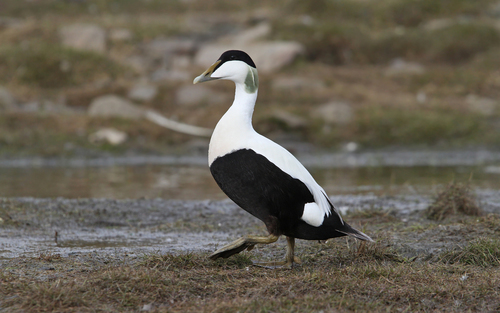
Common Eider (Somateria mollissima) Common Eider
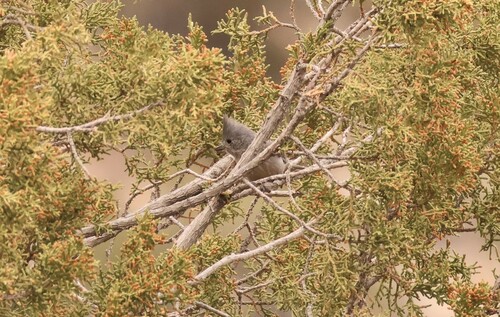
Juniper Titmouse (Baeolophus ridgwayi) Juniper Titmouse

Media

Loading…

In short

The Common Eider and Juniper Titmouse are easily distinguished by habitat and appearance. The Eider is a large sea duck found in coastal waters, while the Titmouse is a small songbird of dry, wooded areas. Observing the environment and size will quickly clarify any confusion.

Identification tips

  1. Location: Check if you are near the coast (Eider) or in dry woodlands (Titmouse). 2. Size: Eiders are much larger than Titmice. 3. Plumage: Look for the Eider's black and white or brown plumage versus the Titmouse's uniform gray with a crest. 4. Behavior: Eiders dive in water, Titmice move through trees. 5. Calls: Listen for the Eider's coastal calls or the Titmouse's whistled trills.

Size

The Common Eider is a large duck, significantly larger than the small Juniper Titmouse.

Plumage

Common Eiders have a distinctive black and white plumage in males and brown in females, while Juniper Titmice are uniformly gray with a small crest.

Behaviour

Common Eiders are often seen diving in groups in the water, whereas Juniper Titmice are more likely to be observed flitting among trees, often in pairs or small groups.

Habitat

Common Eiders inhabit coastal marine environments, while Juniper Titmice are found in dry, juniper and pinyon woodlands.

Voice

Common Eiders have a variety of calls, often heard in coastal areas, while Juniper Titmice have a distinctive, rapid series of whistles or trills.

Submit a better description

Use the same sections as the comparison. Your text is published immediately.

The Common Eider and Juniper Titmouse are easily distinguished by habitat and appearance. The Eider is a large sea duck found in coastal waters, while the Titmouse is a small songbird of dry, wooded areas. Observing the environment and size will quickly clarify any confusion.

  1. Location: Check if you are near the coast (Eider) or in dry woodlands (Titmouse). 2. Size: Eiders are much larger than Titmice. 3. Plumage: Look for the Eider's black and white or brown plumage versus the Titmouse's uniform gray with a crest. 4. Behavior: Eiders dive in water, Titmice move through trees. 5. Calls: Listen for the Eider's coastal calls or the Titmouse's whistled trills.

The Common Eider is a large duck, significantly larger than the small Juniper Titmouse.

Common Eiders have a distinctive black and white plumage in males and brown in females, while Juniper Titmice are uniformly gray with a small crest.

Common Eiders are often seen diving in groups in the water, whereas Juniper Titmice are more likely to be observed flitting among trees, often in pairs or small groups.

Common Eiders inhabit coastal marine environments, while Juniper Titmice are found in dry, juniper and pinyon woodlands.

Common Eiders have a variety of calls, often heard in coastal areas, while Juniper Titmice have a distinctive, rapid series of whistles or trills.

Discard your changes?

You have unsaved edits. If you leave now, those changes will be lost.

Common Eider · Juniper Titmouse · My Tricky Birds