Common Eider vs White-winged Scoter
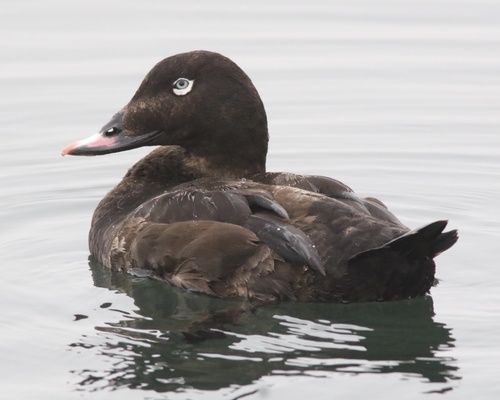
Somateria mollissima versus Melanitta deglandi
Play a quiz with Common Eider and White-winged Scoter
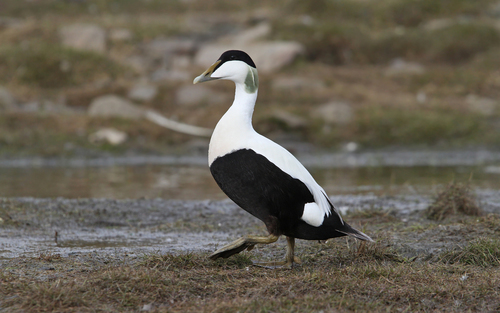
Common Eider
White-winged Scoter
In short
The Common Eider and White-winged Scoter are both large sea ducks, but they can be distinguished by their distinct head shapes and plumage patterns. The Common Eider has a more sloping forehead and a distinctive black cap in males, while the White-winged Scoter features a more rounded head and a white patch on the wings visible in flight.
Identification tips
- Head Shape: Look for the sloping forehead of the Common Eider versus the rounded head of the White-winged Scoter. 2. Plumage: Note the black cap and white body of male Common Eiders compared to the black body and white wing patch of male White-winged Scoters. 3. Flight Pattern: Observe the low, direct flight of the White-winged Scoter. 4. Habitat: Consider the environment; Common Eiders are more coastal, while White-winged Scoters may be found in larger inland water bodies.
Size
Both species are large ducks, but the Common Eider is generally bulkier and has a more pronounced sloping forehead compared to the White-winged Scoter.
Plumage
Male Common Eiders have a striking black and white plumage with a black cap, while females are brown. Male White-winged Scoters are mostly black with a white patch on the wings and a distinctive white eye patch; females are dark brown with less distinct markings.
Behaviour
Both species dive for food, but the White-winged Scoter often flies low over water in lines and has a swift, direct flight. Common Eiders are more likely to be seen in groups, especially during crèching behavior.
Habitat
Common Eiders are often found in coastal marine environments, while White-winged Scoters favor open coastal environments and large wetlands or lakes during breeding.
Voice
Vocalizations are not a primary distinguishing feature in the field for these species.