
Birdr

Common Firecrest vs Eurasian Treecreeper

Regulus ignicapilla versus Certhia familiaris

Play a quiz with Common Firecrest and Eurasian Treecreeper
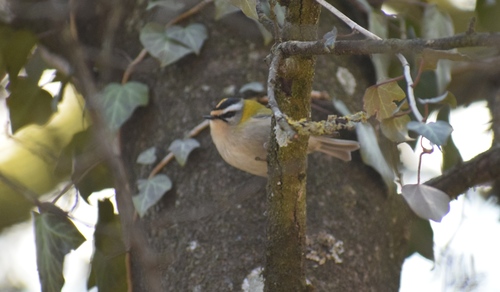
Common Firecrest (Regulus ignicapilla) Common Firecrest
Eurasian Treecreeper (Certhia familiaris) Eurasian Treecreeper

Media

Loading…

In short

The Common Firecrest and Eurasian Treecreeper are distinct in both appearance and behavior. The Firecrest is a small, vibrant bird with striking head markings, while the Treecreeper is more cryptic, with a slender, curved bill and a habit of spiraling up tree trunks.

Identification tips

  1. Look for the bright orange crown stripe of the Firecrest. 2. Observe behavior: the Treecreeper's habit of spiraling up tree trunks is distinctive. 3. Note habitat: Firecrests are more common in coniferous areas, while Treecreepers prefer mature deciduous woods. 4. Listen for vocalizations: the Firecrest's song is rapid and high-pitched, compared to the Treecreeper's thin 'tsee' call.

Size

The Common Firecrest is smaller and more compact than the Eurasian Treecreeper.

Plumage

The Firecrest has a bright orange crown stripe bordered by black, a white supercilium, and olive-green upperparts. The Treecreeper, in contrast, is brown and streaked above, with a white underbelly, blending well with tree bark.

Behaviour

The Firecrest is often seen flitting actively among foliage, while the Treecreeper is known for its distinctive behavior of creeping up tree trunks in a spiral fashion.

Habitat

Both species can be found in woodlands, but the Firecrest prefers coniferous or mixed forests, while the Treecreeper is more often associated with mature deciduous woodlands.

Voice

The Firecrest has a high-pitched, rapid song, while the Treecreeper's call is a thin, high-pitched 'tsee'.

Submit a better description

Use the same sections as the comparison. Your text is published immediately.

The Common Firecrest and Eurasian Treecreeper are distinct in both appearance and behavior. The Firecrest is a small, vibrant bird with striking head markings, while the Treecreeper is more cryptic, with a slender, curved bill and a habit of spiraling up tree trunks.

  1. Look for the bright orange crown stripe of the Firecrest. 2. Observe behavior: the Treecreeper's habit of spiraling up tree trunks is distinctive. 3. Note habitat: Firecrests are more common in coniferous areas, while Treecreepers prefer mature deciduous woods. 4. Listen for vocalizations: the Firecrest's song is rapid and high-pitched, compared to the Treecreeper's thin 'tsee' call.

The Common Firecrest is smaller and more compact than the Eurasian Treecreeper.

The Firecrest has a bright orange crown stripe bordered by black, a white supercilium, and olive-green upperparts. The Treecreeper, in contrast, is brown and streaked above, with a white underbelly, blending well with tree bark.

The Firecrest is often seen flitting actively among foliage, while the Treecreeper is known for its distinctive behavior of creeping up tree trunks in a spiral fashion.

Both species can be found in woodlands, but the Firecrest prefers coniferous or mixed forests, while the Treecreeper is more often associated with mature deciduous woodlands.

The Firecrest has a high-pitched, rapid song, while the Treecreeper's call is a thin, high-pitched 'tsee'.

Discard your changes?

You have unsaved edits. If you leave now, those changes will be lost.

Common Firecrest · Eurasian Treecreeper · My Tricky Birds