Birdr

Common Grackle vs Great-tailed Grackle

Quiscalus quiscula versus Quiscalus mexicanus

Play a quiz with Common Grackle and Great-tailed Grackle

Common Grackle (Quiscalus quiscula) Common Grackle
Great-tailed Grackle (Quiscalus mexicanus) Great-tailed Grackle

Media

Loading…

In short

The Common Grackle and Great-tailed Grackle can be distinguished by size and tail shape. The Great-tailed Grackle is larger with a longer, more keel-shaped tail, while the Common Grackle is smaller and has a less pronounced tail shape. Both species exhibit iridescent plumage, but their habitats and behaviors can also aid identification.

Identification tips

1. Size and Tail: The Great-tailed Grackle is larger with a more pronounced keel-shaped tail. 2. Habitat: Check the surroundings; Great-tailed Grackles prefer drier, open areas with scattered trees, while Common Grackles are more adaptable. 3. Behavior: Look for elaborate displays in Great-tailed Grackles. 4. Vocalizations: Listen for the varied calls of the Great-tailed Grackle compared to the harsher calls of the Common Grackle.

Size

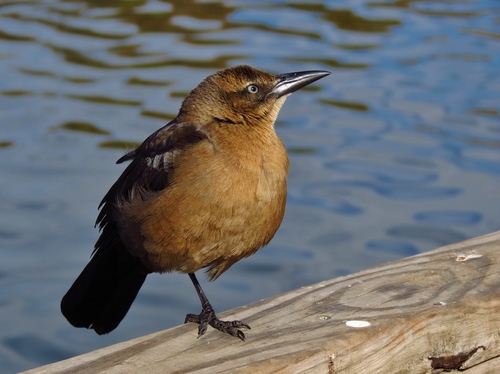
The Great-tailed Grackle is larger than the Common Grackle, with males being particularly larger and more robust.

Plumage

Both species have glossy black plumage with iridescence. The Common Grackle may show more bronze or purple hues, while the Great-tailed Grackle often appears more uniformly glossy black with a purple sheen.

Behaviour

The Great-tailed Grackle is known for its flamboyant behavior, including elaborate courtship displays. The Common Grackle is more flexible in its feeding and nesting behaviors but is less showy.

Habitat

The Common Grackle is widespread across North America and adaptable to various habitats, often found in urban areas and agricultural lands. The Great-tailed Grackle prefers drier habitats with scattered trees near water and is more common in the Midwest and Western U.S.

Voice

The Great-tailed Grackle has a large and varied vocal repertoire, while the Common Grackle's calls are less varied but can be harsh and metallic.

Submit a better description

Use the same sections as the comparison. Your text is published immediately.

The Common Grackle and Great-tailed Grackle can be distinguished by size and tail shape. The Great-tailed Grackle is larger with a longer, more keel-shaped tail, while the Common Grackle is smaller and has a less pronounced tail shape. Both species exhibit iridescent plumage, but their habitats and behaviors can also aid identification.

1. Size and Tail: The Great-tailed Grackle is larger with a more pronounced keel-shaped tail. 2. Habitat: Check the surroundings; Great-tailed Grackles prefer drier, open areas with scattered trees, while Common Grackles are more adaptable. 3. Behavior: Look for elaborate displays in Great-tailed Grackles. 4. Vocalizations: Listen for the varied calls of the Great-tailed Grackle compared to the harsher calls of the Common Grackle.

The Great-tailed Grackle is larger than the Common Grackle, with males being particularly larger and more robust.

Both species have glossy black plumage with iridescence. The Common Grackle may show more bronze or purple hues, while the Great-tailed Grackle often appears more uniformly glossy black with a purple sheen.

The Great-tailed Grackle is known for its flamboyant behavior, including elaborate courtship displays. The Common Grackle is more flexible in its feeding and nesting behaviors but is less showy.

The Common Grackle is widespread across North America and adaptable to various habitats, often found in urban areas and agricultural lands. The Great-tailed Grackle prefers drier habitats with scattered trees near water and is more common in the Midwest and Western U.S.

The Great-tailed Grackle has a large and varied vocal repertoire, while the Common Grackle's calls are less varied but can be harsh and metallic.

Discard your changes?

You have unsaved edits. If you leave now, those changes will be lost.

Common Grackle · Great-tailed Grackle · My Tricky Birds