Birdr

Common Grackle vs Northern Waterthrush

Quiscalus quiscula versus Parkesia noveboracensis

Play a quiz with Common Grackle and Northern Waterthrush

Common Grackle (Quiscalus quiscula) Common Grackle
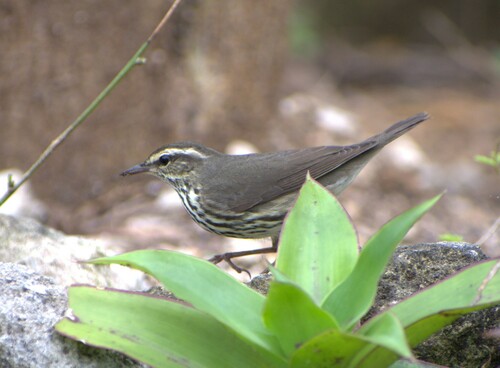
Northern Waterthrush (Parkesia noveboracensis) Northern Waterthrush

Media

Loading…

In short

The Common Grackle and Northern Waterthrush are distinct in appearance and behavior, making them relatively easy to differentiate. The Common Grackle is a large, iridescent blackbird with a long tail, while the Northern Waterthrush is a smaller, streaked warbler with a distinctive bobbing motion. Their habitats also differ significantly, with the grackle favoring open areas and the waterthrush preferring wet, wooded environments.

Identification tips

  1. Size and Shape: Look for the larger size and long tail of the Common Grackle. 2. Plumage: Note the iridescent black plumage of the grackle versus the streaked brown plumage of the waterthrush. 3. Behavior: Observe the grackle's flocking behavior and the waterthrush's solitary, bobbing motion. 4. Habitat: Check the surroundings; grackles prefer open areas, while waterthrushes are near water. 5. Vocalization: Listen for the grackle's harsh calls compared to the waterthrush's clear song.

Size

The Common Grackle is significantly larger than the Northern Waterthrush, with a more robust build and longer tail.

Plumage

The Common Grackle has a glossy, iridescent black plumage, often showing purples and greens, while the Northern Waterthrush is brown with heavy streaking on its underparts and a bold, white supercilium.

Behaviour

Common Grackles are often seen in flocks and exhibit a variety of feeding behaviors, including foraging on the ground. Northern Waterthrushes are solitary and are known for their distinctive bobbing motion as they walk along the edges of water bodies.

Habitat

Common Grackles are found in open areas, including fields and urban environments, while Northern Waterthrushes are typically found in wet, wooded areas, such as swamps and along streams.

Voice

The Common Grackle has a harsh, varied call, often described as a series of squeaks and whistles. The Northern Waterthrush has a loud, clear song, often a series of repeated notes, and a sharp 'chink' call.

Submit a better description

Use the same sections as the comparison. Your text is published immediately.

The Common Grackle and Northern Waterthrush are distinct in appearance and behavior, making them relatively easy to differentiate. The Common Grackle is a large, iridescent blackbird with a long tail, while the Northern Waterthrush is a smaller, streaked warbler with a distinctive bobbing motion. Their habitats also differ significantly, with the grackle favoring open areas and the waterthrush preferring wet, wooded environments.

  1. Size and Shape: Look for the larger size and long tail of the Common Grackle. 2. Plumage: Note the iridescent black plumage of the grackle versus the streaked brown plumage of the waterthrush. 3. Behavior: Observe the grackle's flocking behavior and the waterthrush's solitary, bobbing motion. 4. Habitat: Check the surroundings; grackles prefer open areas, while waterthrushes are near water. 5. Vocalization: Listen for the grackle's harsh calls compared to the waterthrush's clear song.

The Common Grackle is significantly larger than the Northern Waterthrush, with a more robust build and longer tail.

The Common Grackle has a glossy, iridescent black plumage, often showing purples and greens, while the Northern Waterthrush is brown with heavy streaking on its underparts and a bold, white supercilium.

Common Grackles are often seen in flocks and exhibit a variety of feeding behaviors, including foraging on the ground. Northern Waterthrushes are solitary and are known for their distinctive bobbing motion as they walk along the edges of water bodies.

Common Grackles are found in open areas, including fields and urban environments, while Northern Waterthrushes are typically found in wet, wooded areas, such as swamps and along streams.

The Common Grackle has a harsh, varied call, often described as a series of squeaks and whistles. The Northern Waterthrush has a loud, clear song, often a series of repeated notes, and a sharp 'chink' call.

Discard your changes?

You have unsaved edits. If you leave now, those changes will be lost.

Common Grackle · Northern Waterthrush · My Tricky Birds