Common Greenshank vs Red Knot
Tringa nebularia versus Calidris canutus
Play a quiz with Common Greenshank and Red Knot
Common Greenshank
Red Knot
In short
The Common Greenshank and Red Knot are both medium-sized shorebirds, but they differ significantly in structure and habitat preferences. The Greenshank has a longer, slightly upturned bill and is typically found in freshwater habitats, while the Red Knot has a shorter, straight bill and is often seen in coastal areas during migration.
Identification tips
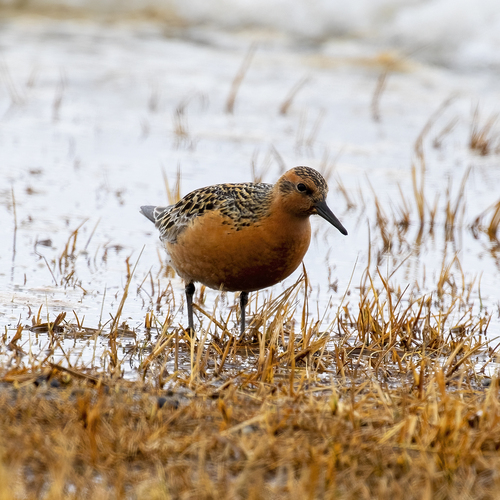
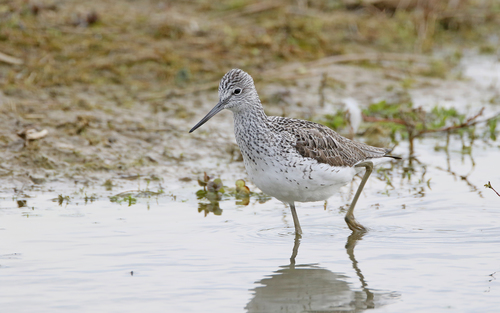
- Bill shape: Greenshank has a longer, slightly upturned bill; Red Knot has a shorter, straight bill. 2. Habitat: Greenshank in freshwater; Red Knot in coastal areas. 3. Plumage: Look for the Greenshank's white supercilium and the Red Knot's rufous chest in breeding season. 4. Behavior: Greenshank's bobbing motion vs. Red Knot's flocking behavior on mudflats.
Size
Both species are similar in size, but the Common Greenshank is slightly larger and more slender compared to the stockier Red Knot.
Plumage
In non-breeding plumage, the Common Greenshank is grayish with a white belly and distinct white supercilium, while the Red Knot is more uniformly gray with a less pronounced supercilium. During breeding, the Red Knot shows a striking rufous coloration on the chest.
Behaviour
Common Greenshanks are often seen wading in shallow waters, foraging with a characteristic bobbing motion. Red Knots are more likely to be seen in large flocks on mudflats or sandy beaches, especially during migration.
Habitat
Common Greenshanks prefer freshwater wetlands, marshes, and estuaries, while Red Knots are primarily found in coastal areas, especially during migration and wintering, favoring mudflats and sandy beaches.
Voice
The Common Greenshank has a distinctive ringing 'teu-teu-teu' call, while the Red Knot is generally quieter, with a soft 'knut' call that is less frequently heard.