Birdr

Common Hoopoe vs Eurasian Wryneck

Upupa epops versus Jynx torquilla

Play a quiz with Common Hoopoe and Eurasian Wryneck
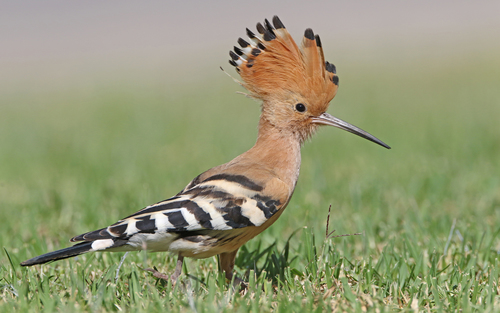
Common Hoopoe (Upupa epops) Common Hoopoe
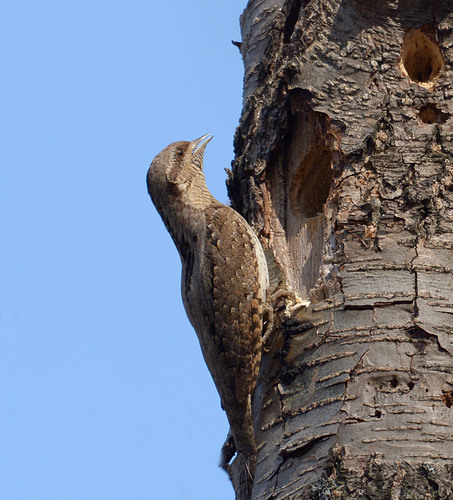
Eurasian Wryneck (Jynx torquilla) Eurasian Wryneck

Media

Loading…

In short

The Common Hoopoe and Eurasian Wryneck can be distinguished by their distinct bills and plumage patterns. The Hoopoe has a long, curved bill and striking black-and-white wing pattern, while the Wryneck has a shorter, straight bill and cryptic, bark-like plumage. Both species are migratory but differ in their feeding behaviors and habitats.

Identification tips

  1. Look for the long, curved bill of the Hoopoe versus the short, straight bill of the Wryneck. 2. Note the bold wing pattern and crest of the Hoopoe. 3. Observe the Wryneck's cryptic plumage and behavior of neck twisting. 4. Consider habitat: Hoopoes are more often in open fields, while Wrynecks are in wooded areas. 5. Listen for the Hoopoe's distinctive call.

Size

The Common Hoopoe is larger and more robust compared to the smaller, more slender Eurasian Wryneck.

Plumage

The Common Hoopoe features a distinctive crest and bold black-and-white wing pattern, contrasting with its pinkish-brown body. In contrast, the Eurasian Wryneck has cryptic, mottled plumage that blends with tree bark, lacking any bright colors or patterns.

Behaviour

The Hoopoe is often seen probing the ground with its long bill, while the Wryneck is more likely to be seen twisting its neck in a snake-like manner, especially when threatened.

Habitat

Both species occupy open habitats, but the Hoopoe is often found in open fields and grasslands, while the Wryneck prefers wooded areas and is more often seen on tree trunks.

Voice

The Common Hoopoe has a distinctive 'hoo-hoo-hoo' call, whereas the Eurasian Wryneck's call is less frequently heard and not as easily recognizable.

Submit a better description

Use the same sections as the comparison. Your text is published immediately.

The Common Hoopoe and Eurasian Wryneck can be distinguished by their distinct bills and plumage patterns. The Hoopoe has a long, curved bill and striking black-and-white wing pattern, while the Wryneck has a shorter, straight bill and cryptic, bark-like plumage. Both species are migratory but differ in their feeding behaviors and habitats.

  1. Look for the long, curved bill of the Hoopoe versus the short, straight bill of the Wryneck. 2. Note the bold wing pattern and crest of the Hoopoe. 3. Observe the Wryneck's cryptic plumage and behavior of neck twisting. 4. Consider habitat: Hoopoes are more often in open fields, while Wrynecks are in wooded areas. 5. Listen for the Hoopoe's distinctive call.

The Common Hoopoe is larger and more robust compared to the smaller, more slender Eurasian Wryneck.

The Common Hoopoe features a distinctive crest and bold black-and-white wing pattern, contrasting with its pinkish-brown body. In contrast, the Eurasian Wryneck has cryptic, mottled plumage that blends with tree bark, lacking any bright colors or patterns.

The Hoopoe is often seen probing the ground with its long bill, while the Wryneck is more likely to be seen twisting its neck in a snake-like manner, especially when threatened.

Both species occupy open habitats, but the Hoopoe is often found in open fields and grasslands, while the Wryneck prefers wooded areas and is more often seen on tree trunks.

The Common Hoopoe has a distinctive 'hoo-hoo-hoo' call, whereas the Eurasian Wryneck's call is less frequently heard and not as easily recognizable.

Discard your changes?

You have unsaved edits. If you leave now, those changes will be lost.

Common Hoopoe · Eurasian Wryneck · My Tricky Birds