Birdr

Common Iora vs Green Iora

Aegithina tiphia versus Aegithina viridissima

Play a quiz with Common Iora and Green Iora
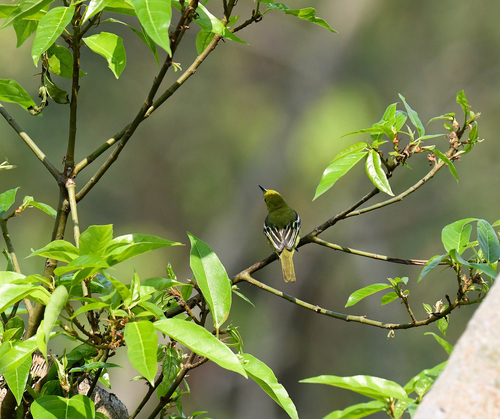
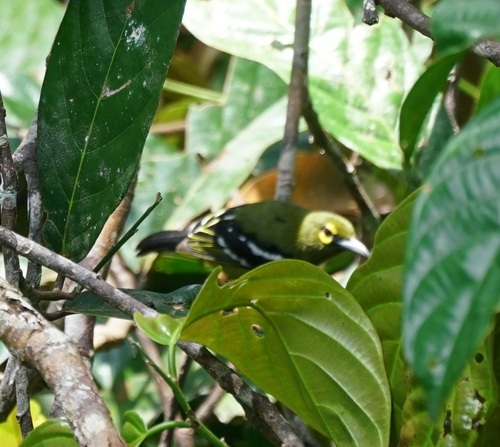
Common Iora (Aegithina tiphia) Common Iora
Green Iora (Aegithina viridissima) Green Iora

Media

Loading…

In short

The Common Iora and Green Iora are similar in appearance but can be distinguished by their plumage and habitat preferences. The Common Iora typically has a more contrasting plumage with brighter yellow underparts, while the Green Iora appears more uniformly green. Both species share similar behaviors and vocalizations, making visual identification crucial.

Identification tips

  1. Look for brighter yellow underparts and black markings in the Common Iora, especially in males. 2. Note the uniform green plumage of the Green Iora. 3. Consider habitat: the Green Iora is more likely in dense forests, while the Common Iora is found in varied environments. 4. Use visual cues over vocalizations, as calls are similar.

Size

Both species are similar in size, typical of the iora family, with no significant differences in structure.

Plumage

The Common Iora (Aegithina tiphia) often shows brighter yellow underparts and more contrasting plumage, with males exhibiting black on the head and back. In contrast, the Green Iora (Aegithina viridissima) has a more uniform green appearance, lacking the strong contrast seen in the Common Iora.

Behaviour

Behaviorally, both species are active and often found in the canopy, making them similar in this regard.

Habitat

The Common Iora is more adaptable, found in a variety of habitats including gardens and open forests, while the Green Iora prefers denser, evergreen forests.

Voice

Vocalizations are similar between the two species, with both producing a series of whistles and trills, making auditory identification challenging.

Submit a better description

Use the same sections as the comparison. Your text is published immediately.

The Common Iora and Green Iora are similar in appearance but can be distinguished by their plumage and habitat preferences. The Common Iora typically has a more contrasting plumage with brighter yellow underparts, while the Green Iora appears more uniformly green. Both species share similar behaviors and vocalizations, making visual identification crucial.

  1. Look for brighter yellow underparts and black markings in the Common Iora, especially in males. 2. Note the uniform green plumage of the Green Iora. 3. Consider habitat: the Green Iora is more likely in dense forests, while the Common Iora is found in varied environments. 4. Use visual cues over vocalizations, as calls are similar.

Both species are similar in size, typical of the iora family, with no significant differences in structure.

The Common Iora (Aegithina tiphia) often shows brighter yellow underparts and more contrasting plumage, with males exhibiting black on the head and back. In contrast, the Green Iora (Aegithina viridissima) has a more uniform green appearance, lacking the strong contrast seen in the Common Iora.

Behaviorally, both species are active and often found in the canopy, making them similar in this regard.

The Common Iora is more adaptable, found in a variety of habitats including gardens and open forests, while the Green Iora prefers denser, evergreen forests.

Vocalizations are similar between the two species, with both producing a series of whistles and trills, making auditory identification challenging.

Discard your changes?

You have unsaved edits. If you leave now, those changes will be lost.

Common Iora · Green Iora · My Tricky Birds