Birdr

Common Kestrel vs Merlin

Falco tinnunculus versus Falco columbarius

Play a quiz with Common Kestrel and Merlin
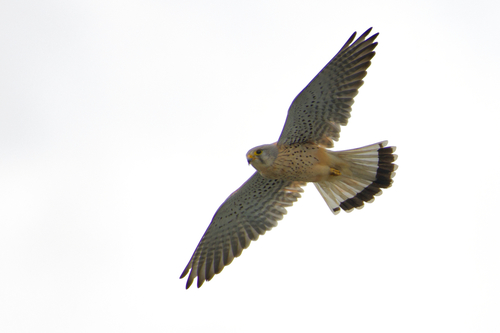
Common Kestrel (Falco tinnunculus) Common Kestrel
Merlin (Falco columbarius) Merlin

Media

Loading…

In short

The Common Kestrel and Merlin are both small falcons, but they differ in structure and plumage. The Common Kestrel has a longer tail and wings, while the Merlin is more compact with a stockier build. Plumage differences are notable, with the Kestrel showing more rufous tones and the Merlin having a more uniform, darker appearance.

Identification tips

  1. Tail and Wing Length: Common Kestrels have longer tails and wings compared to the compact Merlin. 2. Plumage: Look for the rufous upperparts and gray head of the Kestrel versus the darker, more uniform plumage of the Merlin. 3. Behavior: Observe for hovering behavior, typical of Kestrels. 4. Vocalization: Listen for the distinct calls, with the Kestrel's being more repetitive and the Merlin's more rapid and high-pitched.

Size

The Common Kestrel is slightly larger and more slender than the Merlin, which is more compact and stocky.

Plumage

Common Kestrels have rufous upperparts with black spots, a gray head, and a tail with a broad black subterminal band. Merlins are generally darker, with less contrast between the upperparts and underparts, and lack the distinct rufous coloration of the Kestrel.

Behaviour

Common Kestrels are often seen hovering in place while hunting, a behavior less common in Merlins, which tend to pursue prey in fast, direct flights.

Habitat

Both species can be found in open habitats, but the Common Kestrel is more adaptable to urban areas, while the Merlin prefers open woodlands and grasslands.

Voice

The Common Kestrel's call is a repeated 'kee-kee-kee', whereas the Merlin's call is a rapid, high-pitched 'ki-ki-ki'.

Submit a better description

Use the same sections as the comparison. Your text is published immediately.

The Common Kestrel and Merlin are both small falcons, but they differ in structure and plumage. The Common Kestrel has a longer tail and wings, while the Merlin is more compact with a stockier build. Plumage differences are notable, with the Kestrel showing more rufous tones and the Merlin having a more uniform, darker appearance.

  1. Tail and Wing Length: Common Kestrels have longer tails and wings compared to the compact Merlin. 2. Plumage: Look for the rufous upperparts and gray head of the Kestrel versus the darker, more uniform plumage of the Merlin. 3. Behavior: Observe for hovering behavior, typical of Kestrels. 4. Vocalization: Listen for the distinct calls, with the Kestrel's being more repetitive and the Merlin's more rapid and high-pitched.

The Common Kestrel is slightly larger and more slender than the Merlin, which is more compact and stocky.

Common Kestrels have rufous upperparts with black spots, a gray head, and a tail with a broad black subterminal band. Merlins are generally darker, with less contrast between the upperparts and underparts, and lack the distinct rufous coloration of the Kestrel.

Common Kestrels are often seen hovering in place while hunting, a behavior less common in Merlins, which tend to pursue prey in fast, direct flights.

Both species can be found in open habitats, but the Common Kestrel is more adaptable to urban areas, while the Merlin prefers open woodlands and grasslands.

The Common Kestrel's call is a repeated 'kee-kee-kee', whereas the Merlin's call is a rapid, high-pitched 'ki-ki-ki'.

Discard your changes?

You have unsaved edits. If you leave now, those changes will be lost.

Common Kestrel · Merlin · My Tricky Birds