Birdr

Common Linnet vs Common Redpoll

Linaria cannabina versus Acanthis flammea

Play a quiz with Common Linnet and Common Redpoll
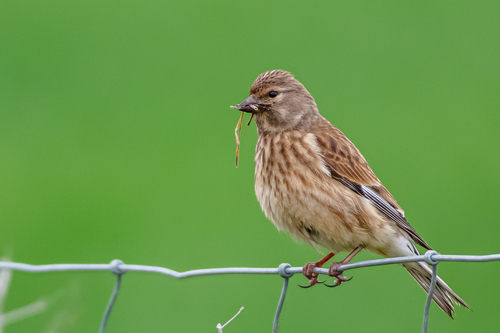
Common Linnet (Linaria cannabina) Common Linnet
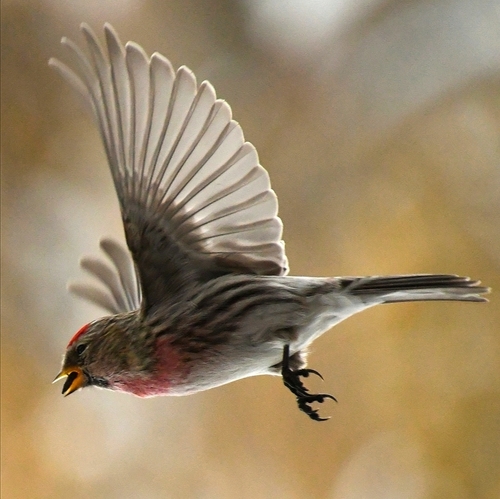
Common Redpoll (Acanthis flammea) Common Redpoll

Media

Loading…

In short

The Common Redpoll (Acanthis flammea) and the Common Linnet (Linaria cannabina) are both small finch-like birds, but they can be distinguished by size, plumage color, vocalizations, and habitat preferences. The Common Redpoll is smaller and has a distinctive red cap on its head, while the Common Linnet has a more robust build, with a subtle reddish hue on its breast and a more varied song.

Identification tips

  1. Birds of the World Similar-Species Diagnostics:
  2. Common Redpolls are characterized by their small size and distinctive red cap, and they are noted for their "streaked brown body" and "whitish underbelly."
  3. Common Linnets, in contrast, "have a more robust body, a pale underbelly, and a warm pinkish-red breast" which differentiates them from the more muted Redpoll.

  4. AI Field Diagnostics:

  5. Look for the red cap on the head of the Common Redpoll; it is a key field mark that is not present in the Common Linnet. The Linnet's pinkish-red breast is also a distinguishing feature.
  6. The size difference is notable; if you can see the birds together, the Linnet will appear more robust than the dainty Redpoll.
  7. Pay attention to vocalizations: the Redpoll's calls are softer and simpler compared to the Linnet's more complex and melodic song, which can be an important clue in identification.
  8. In terms of habitat, if you are in a scrubby area with plenty of seeds, you are more likely to encounter the Linnet, while the Redpoll is more common in open, weedy fields, especially in colder climates.
  9. Finally, observe their foraging behavior: the Redpoll often feeds in flocks, whereas the Linnet can be seen in smaller groups or pairs.

By focusing on these key differences, birdwatchers can successfully distinguish between the Common Redpoll and the Common Linnet in the field.

Size

Plumage

Behaviour

Habitat

Voice

Submit a better description

Use the same sections as the comparison. Your text is published immediately.

The Common Redpoll (Acanthis flammea) and the Common Linnet (Linaria cannabina) are both small finch-like birds, but they can be distinguished by size, plumage color, vocalizations, and habitat preferences. The Common Redpoll is smaller and has a distinctive red cap on its head, while the Common Linnet has a more robust build, with a subtle reddish hue on its breast and a more varied song.

  1. Birds of the World Similar-Species Diagnostics:
  2. Common Redpolls are characterized by their small size and distinctive red cap, and they are noted for their "streaked brown body" and "whitish underbelly."
  3. Common Linnets, in contrast, "have a more robust body, a pale underbelly, and a warm pinkish-red breast" which differentiates them from the more muted Redpoll.

  4. AI Field Diagnostics:

  5. Look for the red cap on the head of the Common Redpoll; it is a key field mark that is not present in the Common Linnet. The Linnet's pinkish-red breast is also a distinguishing feature.
  6. The size difference is notable; if you can see the birds together, the Linnet will appear more robust than the dainty Redpoll.
  7. Pay attention to vocalizations: the Redpoll's calls are softer and simpler compared to the Linnet's more complex and melodic song, which can be an important clue in identification.
  8. In terms of habitat, if you are in a scrubby area with plenty of seeds, you are more likely to encounter the Linnet, while the Redpoll is more common in open, weedy fields, especially in colder climates.
  9. Finally, observe their foraging behavior: the Redpoll often feeds in flocks, whereas the Linnet can be seen in smaller groups or pairs.

By focusing on these key differences, birdwatchers can successfully distinguish between the Common Redpoll and the Common Linnet in the field.

  • Common Redpoll: Typically measures about 4.5 to 5.5 inches (11 to 14 cm) in length with a wingspan of approximately 8.3 to 9.8 inches (21 to 25 cm). They have a lighter, daintier appearance.
  • Common Linnet: Slightly larger, ranging from 5.5 to 6.3 inches (14 to 16 cm) in length and with a wingspan of about 9.1 to 10.6 inches (23 to 27 cm). The Linnet has a more robust body and a thicker, conical bill.
  • Common Redpoll: The adult male has a distinct red crown and a streaky brown body with a whitish underbelly. They also exhibit a hint of rosy coloration on the breast, especially in breeding plumage.
  • Common Linnet: Males display a warm brown and pinkish-red breast with streaked brown upperparts. Their underparts are pale and their wings are dark with white wing bars, giving them a more colorful appearance overall compared to the Redpoll.
  • Common Redpoll: Known for their social behavior, they often feed in flocks and are more commonly found in weedy areas and open fields. They forage mainly on seeds from grasses and weeds.
  • Common Linnet: Also social but often seen in smaller groups. They prefer scrubby habitats and open areas where they can feed on seeds, particularly from plants like thistles and dandelions. Their flight is typically low and undulating.
  • Common Redpoll: Prefers open, weedy areas, especially in northern regions, including arctic tundra and boreal forests. They may also winter in more temperate regions.
  • Common Linnet: Generally found in a variety of habitats including farmland, heathland, and scrub, typically in southern regions of Europe and parts of Asia. They thrive in areas with abundant seed sources.
  • Common Redpoll: Their call is a series of soft, cheerful notes, often described as "chewy" or "chur." They have a soft, twittering song that is melodic and can be quite charming.
  • Common Linnet: Their song is more varied and melodious, characterized by a series of sweet, whistling notes. Males are known to sing from prominent perches to establish territory.

Discard your changes?

You have unsaved edits. If you leave now, those changes will be lost.

Common Linnet · Common Redpoll · My Tricky Birds