Common Moorhen vs Little Crake
Gallinula chloropus versus Zapornia parva
Play a quiz with Common Moorhen and Little Crake

Common Moorhen
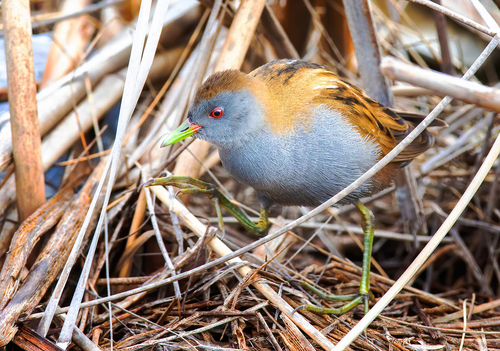
Little Crake
In short
To distinguish between the Common Moorhen and the Little Crake, focus on size and structure first. The Common Moorhen is larger with a more robust build, while the Little Crake is smaller and more delicate. Both species share similar wetland habitats, but their vocalizations and behavior offer additional clues.
Identification tips
- Size and Structure: Look for the larger size and robust build of the Common Moorhen compared to the smaller, more delicate Little Crake. 2. Bill and Shield: The Moorhen's red bill with a yellow tip and red frontal shield are distinctive. 3. Behavior: Note the tail-flicking behavior of the Moorhen. 4. Vocalizations: Listen for the more varied calls of the Moorhen. 5. Habitat Preference: Observe habitat choice; Moorhens are more likely in open water, while Little Crakes prefer dense reeds.
Size
The Common Moorhen is significantly larger and bulkier than the Little Crake.
Plumage
The Common Moorhen has a sooty black plumage with browner upperparts, a red bill with a yellow tip, and a red frontal shield. It also shows a prominent white flank stripe and white undertail coverts. The Little Crake is more subdued, with a greyish-brown body and lacks the Moorhen's bright red bill and shield.
Behaviour
The Common Moorhen frequently flicks its tail while foraging, a distinctive behavior not seen in the Little Crake. The Moorhen is also more likely to be seen in open water.
Habitat
Both species inhabit wetlands, but the Common Moorhen is more adaptable and widespread, often found in a variety of wetland habitats. The Little Crake prefers denser reed beds and is more secretive.
Voice
The Common Moorhen produces a range of vocalizations including shrieks, clucks, and chattering notes. The Little Crake's calls are less varied and more subdued.