Common Nighthawk vs Common Poorwill
Chordeiles minor versus Phalaenoptilus nuttallii
Play a quiz with Common Nighthawk and Common Poorwill
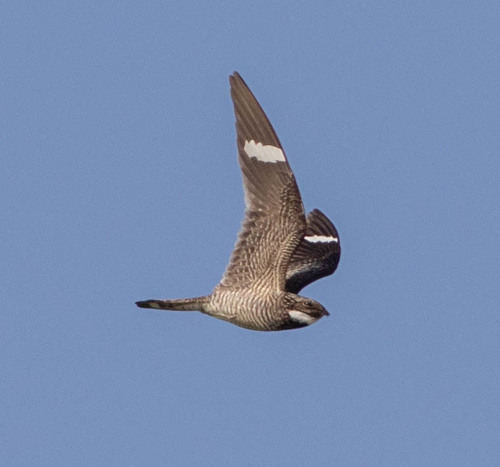
Common Nighthawk
Common Poorwill
In short
The Common Nighthawk and Common Poorwill are both nocturnal insectivores but differ in structure and behavior. The nighthawk is more slender with long, pointed wings, while the poorwill is more compact with a shorter tail and wings. Vocalizations also differ, with the nighthawk producing a distinctive 'peent' call and the poorwill known for its repetitive 'poor-will' song.
Identification tips
1. Wing Shape: Look for the long, pointed wings of the Common Nighthawk, especially the white wing bar visible in flight. 2. Tail Length: The Common Nighthawk has a longer tail compared to the shorter tail of the Common Poorwill. 3. Behavior: Observe flight patterns; nighthawks are more aerial, while poorwills are more ground-oriented. 4. Vocalizations: Listen for the 'peent' of the nighthawk versus the 'poor-will' of the poorwill. 5. Habitat: Consider the environment; nighthawks are more adaptable to urban areas, while poorwills prefer arid, rocky regions.
Size
Common Nighthawk is larger and more slender, with long, pointed wings and a longer tail. Common Poorwill is smaller, more compact, with shorter wings and tail.
Plumage
Both species have cryptic plumage with mottled brown, gray, and white patterns. However, the Common Nighthawk often shows a white bar across the wings in flight, which is absent in the Common Poorwill.
Behaviour
Common Nighthawks are often seen flying at dusk in open areas, performing acrobatic maneuvers to catch insects. Common Poorwills are more likely to be found perched low or on the ground, sallying out to catch insects.
Habitat
Common Nighthawks are found in open areas, including urban environments. Common Poorwills prefer more arid, rocky habitats such as prairies and foothills.
Voice
Common Nighthawk has a distinctive 'peent' call, often heard during its aerial displays. Common Poorwill is known for its repetitive 'poor-will' song, often heard at night.