
Birdr

Common Nighthawk vs Red-necked Nightjar

Chordeiles minor versus Caprimulgus ruficollis

Play a quiz with Common Nighthawk and Red-necked Nightjar
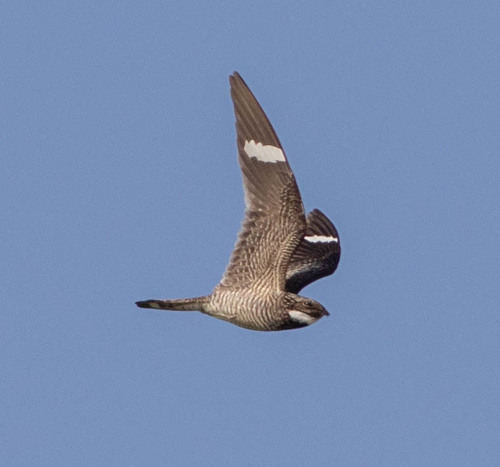
Common Nighthawk (Chordeiles minor) Common Nighthawk
Red-necked Nightjar (Caprimulgus ruficollis) Red-necked Nightjar

Media

Loading…

In short

The Common Nighthawk and Red-necked Nightjar can be distinguished by their wing markings and vocalizations. The Common Nighthawk has a distinctive white bar across its primaries, while the Red-necked Nightjar lacks this feature. Their calls also differ significantly, aiding in identification.

Identification tips

  1. Look for the white bar on the primaries of the Common Nighthawk. 2. Note the more rufous neck and lack of white wing bar in the Red-necked Nightjar. 3. Listen for the Common Nighthawk's 'peent' call versus the Red-necked Nightjar's churring. 4. Consider the habitat: open areas for Common Nighthawk, scrub and woodland for Red-necked Nightjar.

Size

Both species are similar in size, but the Red-necked Nightjar is slightly larger and more robust.

Plumage

The Common Nighthawk has a white bar across the primaries and a generally mottled brown appearance. The Red-necked Nightjar lacks the white bar and has a more rufous tone, particularly around the neck.

Behaviour

Both species are crepuscular and nocturnal, often seen flying at dusk. The Common Nighthawk is known for its erratic flight patterns, while the Red-necked Nightjar tends to fly more steadily.

Habitat

Common Nighthawks are found in open areas across North America, while Red-necked Nightjars inhabit scrub and woodland areas in southern Europe and North Africa.

Voice

The Common Nighthawk has a distinctive, nasal 'peent' call, while the Red-necked Nightjar produces a series of rapid, churring notes.

Submit a better description

Use the same sections as the comparison. Your text is published immediately.

The Common Nighthawk and Red-necked Nightjar can be distinguished by their wing markings and vocalizations. The Common Nighthawk has a distinctive white bar across its primaries, while the Red-necked Nightjar lacks this feature. Their calls also differ significantly, aiding in identification.

  1. Look for the white bar on the primaries of the Common Nighthawk. 2. Note the more rufous neck and lack of white wing bar in the Red-necked Nightjar. 3. Listen for the Common Nighthawk's 'peent' call versus the Red-necked Nightjar's churring. 4. Consider the habitat: open areas for Common Nighthawk, scrub and woodland for Red-necked Nightjar.

Both species are similar in size, but the Red-necked Nightjar is slightly larger and more robust.

The Common Nighthawk has a white bar across the primaries and a generally mottled brown appearance. The Red-necked Nightjar lacks the white bar and has a more rufous tone, particularly around the neck.

Both species are crepuscular and nocturnal, often seen flying at dusk. The Common Nighthawk is known for its erratic flight patterns, while the Red-necked Nightjar tends to fly more steadily.

Common Nighthawks are found in open areas across North America, while Red-necked Nightjars inhabit scrub and woodland areas in southern Europe and North Africa.

The Common Nighthawk has a distinctive, nasal 'peent' call, while the Red-necked Nightjar produces a series of rapid, churring notes.

Discard your changes?

You have unsaved edits. If you leave now, those changes will be lost.

Common Nighthawk · Red-necked Nightjar · My Tricky Birds