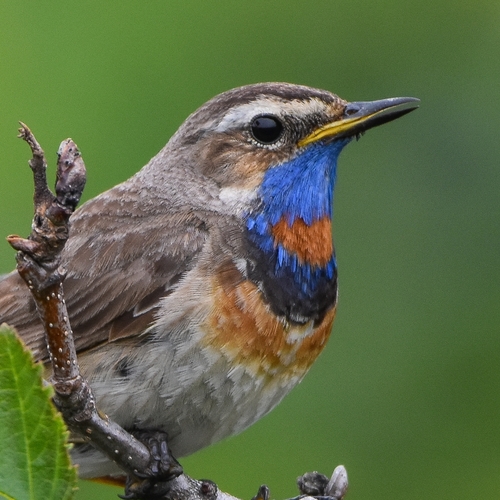
Common Nightingale vs Bluethroat
Luscinia megarhynchos versus Luscinia svecica
Play a quiz with Common Nightingale and Bluethroat
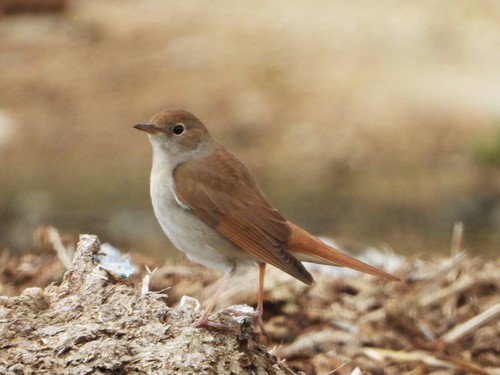
Common Nightingale
Bluethroat
In short
The Common Nightingale and Bluethroat are both small, brownish birds, but the Bluethroat is more colorful, especially the males. The Nightingale is more elusive, often heard rather than seen, while the Bluethroat is more likely to be spotted in open areas.
Identification tips
- Male Bluethroat: Look for the blue throat with a central spot, visible in open areas. 2. Common Nightingale: Listen for its song from dense cover; look for plain brown plumage and rusty tail. 3. Habitat: Nightingales in dense thickets, Bluethroats in wetlands. 4. Behavior: Nightingales are elusive; Bluethroats are more conspicuous.
Size
Both species are similar in size, but the Bluethroat may appear slightly bulkier due to its more upright posture.
Plumage
The Common Nightingale has plain brown upperparts and a rusty brown tail, while the Bluethroat, especially males, features a striking blue throat with a central spot (red or white depending on the subspecies) and a more varied plumage with a white supercilium.
Behaviour
Common Nightingales are secretive and prefer dense cover, making them difficult to spot. Bluethroats are more likely to be seen in open areas, often perching conspicuously.
Habitat
The Common Nightingale is found in dense underbrush and thickets, while the Bluethroat prefers marshy areas, wet meadows, and reed beds.
Voice
The Nightingale is famous for its rich and varied song, often delivered from deep cover. The Bluethroat's song is also complex but includes more mimicry and is often delivered from a visible perch.