
Common Nightingale vs Common Redstart
Luscinia megarhynchos versus Phoenicurus phoenicurus
Play a quiz with Common Nightingale and Common Redstart
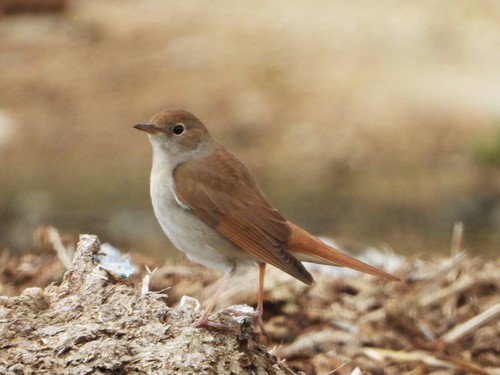
Common Nightingale
Common Redstart
In short
The Common Nightingale and Common Redstart are both Old World flycatchers, but they differ significantly in appearance and behavior. The Nightingale is more elusive with plain brown plumage, while the Redstart is more colorful and active, often seen flicking its tail.
Identification tips
- Tail Color: Look for the bright orange-red tail of the Common Redstart, visible even in females and juveniles. 2. Plumage: Note the plain brown plumage of the Common Nightingale versus the more colorful Common Redstart. 3. Behavior: Observe the behavior; the Nightingale is more secretive, while the Redstart is active and often flicks its tail. 4. Vocalization: Listen for the rich song of the Nightingale compared to the simpler song and ticking call of the Redstart.
Size
Both species are similar in size, but the Common Redstart may appear slightly more compact due to its shorter tail.
Plumage
The Common Nightingale has plain brown upperparts and a rusty brown tail, while the Common Redstart is more striking with a slate-grey head, bright orange-red tail, and white forehead in males. Females and juveniles of the Redstart are duller but still show the distinctive red tail.
Behaviour
The Common Nightingale is secretive, often staying in dense cover, while the Common Redstart is more active and conspicuous, frequently seen perching in the open and flicking its tail.
Habitat
Both species can be found in woodland and scrub, but the Common Nightingale prefers denser underbrush, while the Common Redstart is more adaptable to open woodlands and gardens.
Voice
The Common Nightingale is famous for its rich, melodious song, often delivered from deep cover. The Common Redstart has a simpler, more repetitive song and a distinctive 'ticking' call.