Common Nightingale vs Red-breasted Flycatcher
Luscinia megarhynchos versus Ficedula parva
Play a quiz with Common Nightingale and Red-breasted Flycatcher
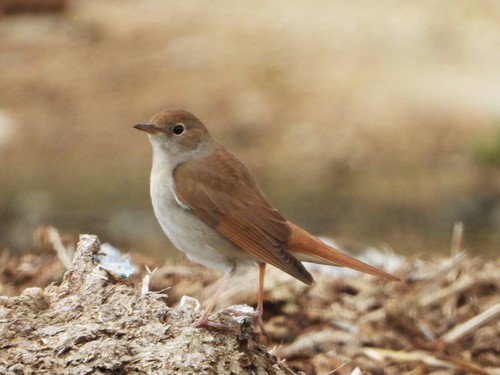
Common Nightingale
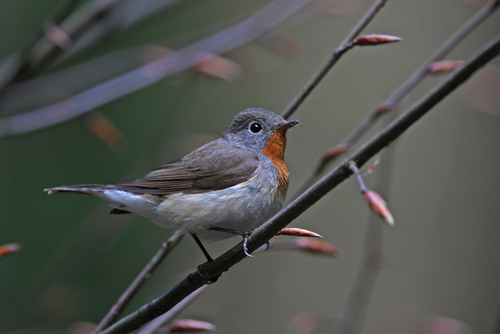
Red-breasted Flycatcher
In short
The Common Nightingale and the Red-breasted Flycatcher are both Old World flycatchers, but they differ significantly in appearance and behavior. The Nightingale is more elusive and often heard rather than seen, while the Flycatcher is more visually distinctive with its contrasting plumage.
Identification tips
1. Look for the Nightingale's plain brown plumage and rusty tail, often hidden in dense cover. 2. Spot the Flycatcher's orange-red throat patch (in males) and active behavior in open areas. 3. Listen for the Nightingale's complex song versus the Flycatcher's simpler, high-pitched notes.
Size
The Common Nightingale is slightly larger and more robust compared to the smaller, more delicate Red-breasted Flycatcher.
Plumage
The Common Nightingale has plain brown upperparts and a rusty brown tail, with pale underparts and a variable buffy wash. In contrast, the Red-breasted Flycatcher features a more striking appearance with a greyish-brown back, white underparts, and a distinctive orange-red throat patch in males.
Behaviour
Common Nightingales are often hidden in dense underbrush and are more often heard than seen. Red-breasted Flycatchers are more active and frequently seen in open areas, often flicking their wings and tail.
Habitat
Common Nightingales prefer dense, shrubby areas and woodlands, while Red-breasted Flycatchers are found in open woodlands and forest edges.
Voice
The Common Nightingale is renowned for its rich and melodious song, often delivered from deep cover. The Red-breasted Flycatcher has a simpler song, consisting of a series of high-pitched notes.
Common Nightingale · Red-breasted Flycatcher · My Tricky Birds