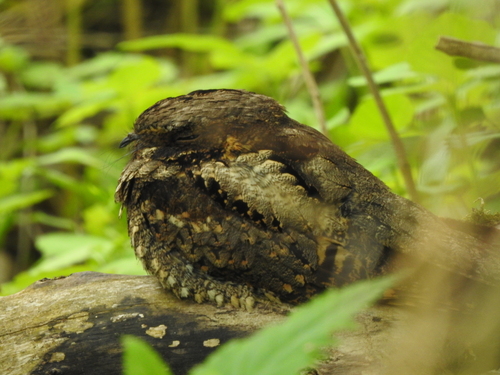
Common Pauraque vs Eastern Whip-poor-will
Nyctidromus albicollis versus Antrostomus vociferus
Play a quiz with Common Pauraque and Eastern Whip-poor-will
Common Pauraque
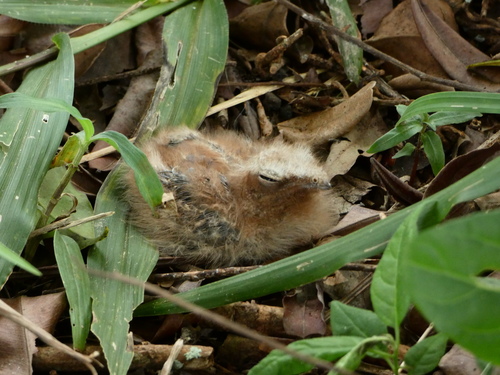
Eastern Whip-poor-will
In short
The Common Pauraque and Eastern Whip-poor-will are both nightjars with cryptic plumage, but they can be distinguished by their vocalizations and habitat preferences. The Pauraque's distinctive white wing bands and long tail with white in the rectrices contrast with the Whip-poor-will's more uniform and cryptic appearance. Their calls are also key: the Pauraque's 'hip-hip-hooray' differs from the Whip-poor-will's emphatic 'WHIP-poor-WILL'.
Identification tips
1. Look for the white wing bands and tail markings on the Common Pauraque. 2. Listen for vocalizations: Pauraque's 'hip-hip-hooray' vs. Whip-poor-will's 'WHIP-poor-WILL'. 3. Consider habitat: Pauraque in tropical lowlands, Whip-poor-will in North American woodlands. 4. Note behavior: Pauraque more terrestrial, Whip-poor-will more arboreal.
Size
Both species are similar in size, but the Common Pauraque is slightly larger and more robust than the Eastern Whip-poor-will.
Plumage
The Common Pauraque has a more intricate pattern with browns, buffs, grays, and blacks, and is notable for its white wing bands and tail markings. The Eastern Whip-poor-will is more uniformly cryptic, blending well with leaf litter.
Behaviour
Both species are crepuscular and nocturnal, but the Pauraque is more terrestrial, often seen foraging on the ground. The Whip-poor-will is more arboreal, nesting and roosting on the forest floor but foraging in flight.
Habitat
The Common Pauraque is found in open and semi-open areas in tropical lowlands, while the Eastern Whip-poor-will prefers deciduous or mixed woodlands in North America.
Voice
The Common Pauraque's call is a breezy 'hip-hip-hooray', whereas the Eastern Whip-poor-will's call is a repetitive 'WHIP-poor-WILL'.