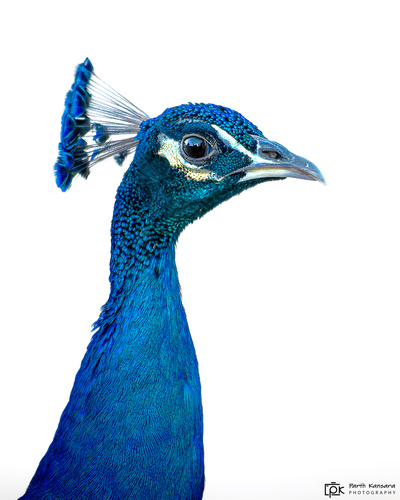
Common Pheasant vs Indian Peafowl
Phasianus colchicus versus Pavo cristatus
Play a quiz with Common Pheasant and Indian Peafowl
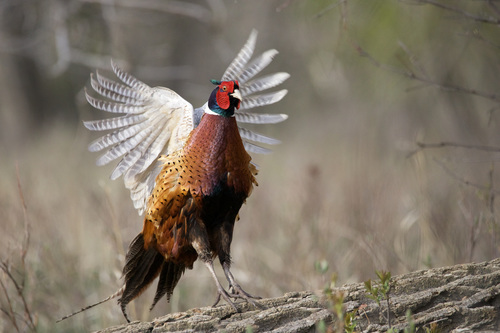
Common Pheasant
Indian Peafowl
In short
The Common Pheasant and Indian Peafowl are both large, ground-dwelling birds, but they can be distinguished by their tail and plumage. The Common Pheasant has a long, pointed tail and varied plumage, while the Indian Peafowl is known for its iridescent blue body and elaborate tail feathers in males.
Identification tips
1. Tail Shape: Look for the long, pointed tail of the Common Pheasant versus the large, fan-like tail of the Indian Peafowl male. 2. Plumage: Note the iridescent blue body and eye-spotted tail feathers of the male Indian Peafowl. 3. Call: Listen for the loud, nasal calls of the Indian Peafowl, especially at dawn and dusk. 4. Habitat: Consider the habitat; Indian Peafowls are more likely found in open forests, while Common Pheasants are often near agricultural areas.
Size
Both species are large birds, but the Indian Peafowl is generally larger and more robust than the Common Pheasant.
Plumage
The Common Pheasant displays a variety of plumage patterns depending on the subspecies, often with a white ring around the neck and a mix of browns and greens. The Indian Peafowl male is unmistakable with its iridescent blue body and large, fan-like tail adorned with eye spots. Females of both species are more subdued in color, but the peahen is generally brown with a greenish neck.
Behaviour
Both species are ground-dwelling and can be seen foraging on the ground. The Indian Peafowl is known for its dramatic courtship displays, where the male fans its tail feathers.
Habitat
Common Pheasants are adaptable and found in a variety of habitats, often near agricultural areas. Indian Peafowls are typically found in open forests and near human habitation in their native range.
Voice
The Indian Peafowl is known for its loud, nasal calls, especially at dawn and dusk, which can alert observers to its presence. The Common Pheasant's calls are less distinctive and not as frequently noted.