Birdr

Common Reed Warbler vs Great Reed Warbler

Acrocephalus scirpaceus versus Acrocephalus arundinaceus

Play a quiz with Common Reed Warbler and Great Reed Warbler
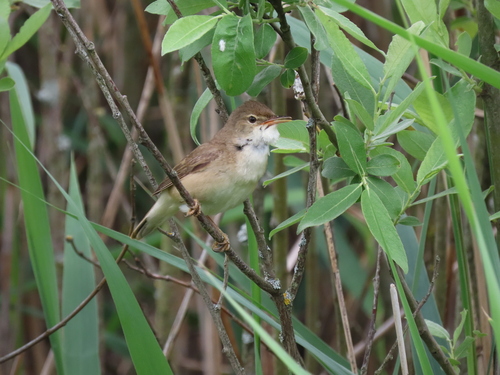
Common Reed Warbler (Acrocephalus scirpaceus) Common Reed Warbler
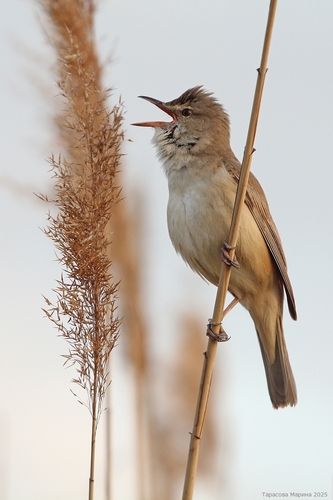
Great Reed Warbler (Acrocephalus arundinaceus) Great Reed Warbler

Media

Loading…

In short

The Great Reed Warbler is notably larger and more robust than the Common Reed Warbler, with a heavier bill and longer tail. Both species inhabit reed beds, but the Great Reed Warbler's song is louder and more varied, making it a key distinguishing feature.

Identification tips

Size

The Great Reed Warbler is significantly larger, with a more robust build compared to the smaller and more slender Common Reed Warbler.

Plumage

Both species have similar brownish upperparts and paler underparts, but the Great Reed Warbler often appears more rufous on the wings and back. The Common Reed Warbler tends to have a more uniform and less contrasting plumage.

Behaviour

Both species are often seen skulking in reeds, but the Great Reed Warbler is more likely to be observed singing prominently from exposed perches.

Habitat

Both species prefer reed beds, but the Great Reed Warbler is more often associated with larger reed beds and can also be found in more diverse wetland habitats.

Voice

The Great Reed Warbler has a loud, varied, and harsh song, while the Common Reed Warbler's song is softer and more rhythmic. This vocal difference is a reliable field mark.

Submit a better description

Use the same sections as the comparison. Your text is published immediately.

The Great Reed Warbler is notably larger and more robust than the Common Reed Warbler, with a heavier bill and longer tail. Both species inhabit reed beds, but the Great Reed Warbler's song is louder and more varied, making it a key distinguishing feature.

  • Size and Structure: Look for the larger size and heavier bill of the Great Reed Warbler.
  • Vocalization: Listen for the loud, varied song of the Great Reed Warbler compared to the softer song of the Common Reed Warbler.
  • Plumage: Note the more rufous tones on the Great Reed Warbler's wings and back.
  • Behavior: Observe if the bird is singing from an exposed perch, which is more typical of the Great Reed Warbler.

The Great Reed Warbler is significantly larger, with a more robust build compared to the smaller and more slender Common Reed Warbler.

Both species have similar brownish upperparts and paler underparts, but the Great Reed Warbler often appears more rufous on the wings and back. The Common Reed Warbler tends to have a more uniform and less contrasting plumage.

Both species are often seen skulking in reeds, but the Great Reed Warbler is more likely to be observed singing prominently from exposed perches.

Both species prefer reed beds, but the Great Reed Warbler is more often associated with larger reed beds and can also be found in more diverse wetland habitats.

The Great Reed Warbler has a loud, varied, and harsh song, while the Common Reed Warbler's song is softer and more rhythmic. This vocal difference is a reliable field mark.

Discard your changes?

You have unsaved edits. If you leave now, those changes will be lost.

Common Reed Warbler · Great Reed Warbler · My Tricky Birds