Birdr

Common Reed Warbler vs Lanceolated Warbler

Acrocephalus scirpaceus versus Locustella lanceolata

Play a quiz with Common Reed Warbler and Lanceolated Warbler
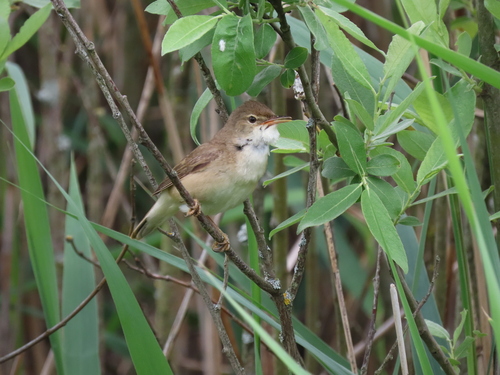
Common Reed Warbler (Acrocephalus scirpaceus) Common Reed Warbler
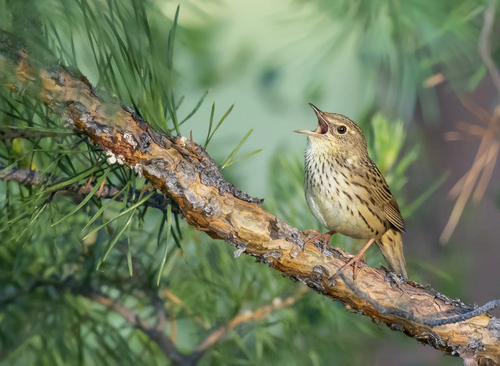
Lanceolated Warbler (Locustella lanceolata) Lanceolated Warbler

Media

Loading…

In short

The Common Reed Warbler and Lanceolated Warbler can be distinguished by their structure and plumage. The Common Reed Warbler is typically found in reed beds and has a more uniform brown plumage, while the Lanceolated Warbler is heavily streaked and found in grassy habitats. Their vocalizations also differ significantly.

Identification tips

Size

Both species are small, but the Lanceolated Warbler is slightly smaller at 12–13.5 cm compared to the Common Reed Warbler.

Plumage

The Common Reed Warbler has a more uniform brown plumage without significant streaking, whereas the Lanceolated Warbler is olive-brown with heavy blackish streaks, especially on the underparts and rump. The Lanceolated Warbler also has a narrow whitish supercilium and dark lores.

Behaviour

The Common Reed Warbler is often seen weaving its nest between reeds, while the Lanceolated Warbler may be observed running among roots and stems on the ground.

Habitat

Common Reed Warblers prefer marshy habitats with reeds and sedges, while Lanceolated Warblers are found in grassy areas and sometimes on the ground.

Voice

The Common Reed Warbler's song is not described here, but the Lanceolated Warbler has a continuous thin reel with a 'ventriloquial' effect, and an explosive 'tzhk-tzhk-tzhk' call.

Submit a better description

Use the same sections as the comparison. Your text is published immediately.

The Common Reed Warbler and Lanceolated Warbler can be distinguished by their structure and plumage. The Common Reed Warbler is typically found in reed beds and has a more uniform brown plumage, while the Lanceolated Warbler is heavily streaked and found in grassy habitats. Their vocalizations also differ significantly.

  • Structure: Look for the more uniform plumage and habitat preference of the Common Reed Warbler in reed beds.
  • Plumage: Note the heavy streaking and narrow supercilium of the Lanceolated Warbler.
  • Vocalization: Listen for the distinctive 'tzhk-tzhk-tzhk' call of the Lanceolated Warbler.
  • Behavior: Observe the nesting behavior in reeds for the Common Reed Warbler versus ground foraging for the Lanceolated Warbler.

Both species are small, but the Lanceolated Warbler is slightly smaller at 12–13.5 cm compared to the Common Reed Warbler.

The Common Reed Warbler has a more uniform brown plumage without significant streaking, whereas the Lanceolated Warbler is olive-brown with heavy blackish streaks, especially on the underparts and rump. The Lanceolated Warbler also has a narrow whitish supercilium and dark lores.

The Common Reed Warbler is often seen weaving its nest between reeds, while the Lanceolated Warbler may be observed running among roots and stems on the ground.

Common Reed Warblers prefer marshy habitats with reeds and sedges, while Lanceolated Warblers are found in grassy areas and sometimes on the ground.

The Common Reed Warbler's song is not described here, but the Lanceolated Warbler has a continuous thin reel with a 'ventriloquial' effect, and an explosive 'tzhk-tzhk-tzhk' call.

Discard your changes?

You have unsaved edits. If you leave now, those changes will be lost.

Common Reed Warbler · Lanceolated Warbler · My Tricky Birds