Common Ringed Plover vs Little Ringed Plover
Charadrius hiaticula versus Thinornis dubius
Play a quiz with Common Ringed Plover and Little Ringed Plover
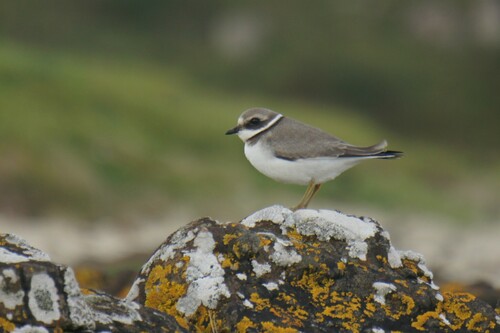
Common Ringed Plover
Little Ringed Plover
In short
The Common Ringed Plover (Charadrius hiaticula) and the Little Ringed Plover (Thinornis dubius) are two similar shorebirds that can be distinguished by their size, plumage patterns, and vocalizations. The Common Ringed Plover is generally larger and has distinctive facial markings, while the Little Ringed Plover is smaller with a notable yellow eye-ring and a more subtle color palette.
Identification tips
- Birds of the World Similar-Species Diagnostics:
- The Common Ringed Plover is noted for having "more robust and stocky build" and "distinctive black bands across the forehead and breast" (Birds of the World).
-
The Little Ringed Plover, in contrast, is described as "smaller and more slender," characterized by a "yellow eye-ring" and lacking the black breast band found in the Common Ringed Plover (Birds of the World).
-
AI Field Diagnostics:
- Size & Shape: Pay attention to body size; the Common Ringed Plover is the larger of the two. Look for a stockier build versus a more slender profile in the Little Ringed Plover.
- Facial Markings: The black forehead band of the Common Ringed Plover is a key distinguishing feature. In contrast, the Little Ringed Plover's yellow eye-ring is prominent and can help differentiate the two species.
- Behavior: Observe their feeding behavior; the Common Ringed Plover tends to forage in groups and has a "run and pause" technique, while the Little Ringed Plover may be seen darting alone or in pairs.
- Vocalizations: Listen for calls; the Common Ringed Plover has a repetitive sharp "pee pee," while the Little Ringed Plover produces a series of softer calls.
By focusing on these key differences, birdwatchers can effectively distinguish between the Common Ringed Plover and the Little Ringed Plover in the field.
Size
- Common Ringed Plover: Typically measures 18-20 cm in length, with a wingspan of 45-50 cm. It has a stockier build and a rounded head.
- Little Ringed Plover: Slightly smaller, measuring about 15-17 cm in length, with a wingspan of 37-40 cm. It appears more slender and has a longer neck relative to its body size.
Plumage
- Common Ringed Plover: Exhibits a distinctive breeding plumage with a brownish upper body, white underparts, and a prominent black band across the forehead that extends to the eyes. Its breast is also marked by a black band.
- Little Ringed Plover: Has a more muted color palette, with a sandy-brown upper body and white underparts. It is characterized by a yellow eye-ring and lacks the prominent black forehead band, making its facial markings less striking.
Behaviour
- Common Ringed Plover: Often found foraging on sandy or pebbly shores, they engage in a characteristic run-and-pause feeding style. They tend to be more social, often seen in small groups.
- Little Ringed Plover: Prefers gravelly or sandy riverbanks and often forages alone or in pairs. They are more prone to quick, darting movements when disturbed.
Habitat
- Common Ringed Plover: Typically inhabits coastal areas, estuaries, and sandy or pebbly beaches. They are often found in both inland and coastal wetlands.
- Little Ringed Plover: Prefers inland habitats such as gravel pits, riverbanks, and wet fields. They are less associated with coastal environments compared to the Common Ringed Plover.
Voice
- Common Ringed Plover: Their call is a distinctive sharp "pee pee" sound, often repeated, especially during breeding season.
- Little Ringed Plover: Their vocalizations are higher-pitched and more varied, characterized by a series of soft, rapid calls that can sound like "wee-wee-wee".
Common Ringed Plover · Little Ringed Plover · My Tricky Birds