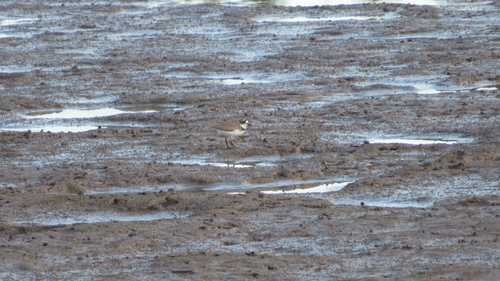
Common Ringed Plover vs Long-billed Plover
Charadrius hiaticula versus Thinornis placidus
Play a quiz with Common Ringed Plover and Long-billed Plover

Common Ringed Plover
Long-billed Plover
In short
The bill length is the most reliable field mark: the Long-billed Plover has a noticeably longer bill compared to the Common Ringed Plover. Both species have similar plumage patterns, but subtle differences in structure and habitat preferences can aid identification.
Identification tips
- Bill length: Long-billed Plover has a longer bill.
- Habitat: Check for habitat; Long-billed Plover is more likely inland.
- Face pattern: Look for subtle differences in face and collar contrast.
- Vocalization: Listen for harsher calls in Long-billed Plover, though not always reliable.
Size
Both species are similar in size, but the Long-billed Plover may appear slightly larger due to its longer bill.
Plumage
Both species have a similar plumage pattern with a distinctive black breast band and white underparts. The Common Ringed Plover typically has a more pronounced white collar and a more contrasting face pattern, but these differences can be subtle.
Behaviour
Both species exhibit similar foraging behaviors, often seen running and stopping on mudflats or sandy shores.
Habitat
The Common Ringed Plover is often found in coastal areas, while the Long-billed Plover prefers inland riverine habitats, especially in Asia.
Voice
Vocalizations are not a primary distinguishing feature in the field; both species have similar calls, though the Long-billed Plover's call may be slightly harsher.