Birdr

Common Ringed Plover vs Piping Plover

Charadrius hiaticula versus Charadrius melodus

Play a quiz with Common Ringed Plover and Piping Plover

Common Ringed Plover (Charadrius hiaticula) Common Ringed Plover
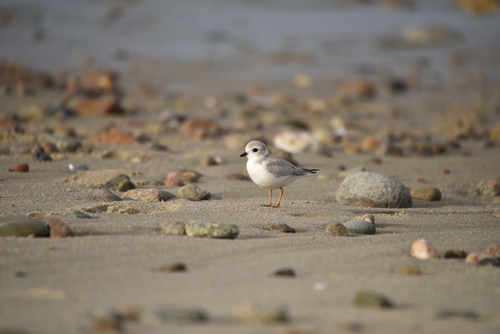
Piping Plover (Charadrius melodus) Piping Plover

Media

Loading…

In short

The Common Ringed Plover and Piping Plover are similar small shorebirds, but can be distinguished by their bill size and coloration. The Common Ringed Plover has a slightly larger and darker bill, while the Piping Plover features a smaller, more orange bill with a black tip. Both species have similar body shapes and plumage patterns, but their habitat preferences and vocalizations differ significantly.

Identification tips

Size

Both species are small plovers, but the Common Ringed Plover is slightly larger with a more robust build.

Plumage

The Common Ringed Plover has a more pronounced black band across the chest and a darker overall plumage, while the Piping Plover has a paler, sandy coloration with a less distinct chest band. The Piping Plover's legs are more orange compared to the Common Ringed Plover's yellowish legs.

Behaviour

Both species exhibit similar foraging behaviors, but the Piping Plover is more likely to be seen on open sandy beaches, while the Common Ringed Plover is often found in more varied coastal habitats.

Habitat

The Common Ringed Plover is found in a variety of coastal habitats across Europe and Asia, including mudflats and estuaries. The Piping Plover is primarily found on sandy beaches and alkali flats in North America, with distinct breeding and wintering ranges.

Voice

The Common Ringed Plover has a more melodious and varied call, while the Piping Plover's call is a distinctive, clear 'peep-lo'.

Submit a better description

Use the same sections as the comparison. Your text is published immediately.

The Common Ringed Plover and Piping Plover are similar small shorebirds, but can be distinguished by their bill size and coloration. The Common Ringed Plover has a slightly larger and darker bill, while the Piping Plover features a smaller, more orange bill with a black tip. Both species have similar body shapes and plumage patterns, but their habitat preferences and vocalizations differ significantly.

  • Bill: Look for the larger, darker bill of the Common Ringed Plover versus the smaller, orange bill with a black tip of the Piping Plover.
  • Leg Color: The Piping Plover has more orange legs, while the Common Ringed Plover's legs are yellowish.
  • Chest Band: The Common Ringed Plover has a more defined black chest band.
  • Habitat: Note the habitat; Piping Plovers prefer sandy beaches, while Common Ringed Plovers are in varied coastal areas.
  • Call: Listen for the Piping Plover's clear 'peep-lo' call.

Both species are small plovers, but the Common Ringed Plover is slightly larger with a more robust build.

The Common Ringed Plover has a more pronounced black band across the chest and a darker overall plumage, while the Piping Plover has a paler, sandy coloration with a less distinct chest band. The Piping Plover's legs are more orange compared to the Common Ringed Plover's yellowish legs.

Both species exhibit similar foraging behaviors, but the Piping Plover is more likely to be seen on open sandy beaches, while the Common Ringed Plover is often found in more varied coastal habitats.

The Common Ringed Plover is found in a variety of coastal habitats across Europe and Asia, including mudflats and estuaries. The Piping Plover is primarily found on sandy beaches and alkali flats in North America, with distinct breeding and wintering ranges.

The Common Ringed Plover has a more melodious and varied call, while the Piping Plover's call is a distinctive, clear 'peep-lo'.

Discard your changes?

You have unsaved edits. If you leave now, those changes will be lost.

Common Ringed Plover · Piping Plover · My Tricky Birds