Birdr

Common Rock Thrush vs Whinchat

Monticola saxatilis versus Saxicola rubetra

Play a quiz with Common Rock Thrush and Whinchat

Common Rock Thrush (Monticola saxatilis) Common Rock Thrush
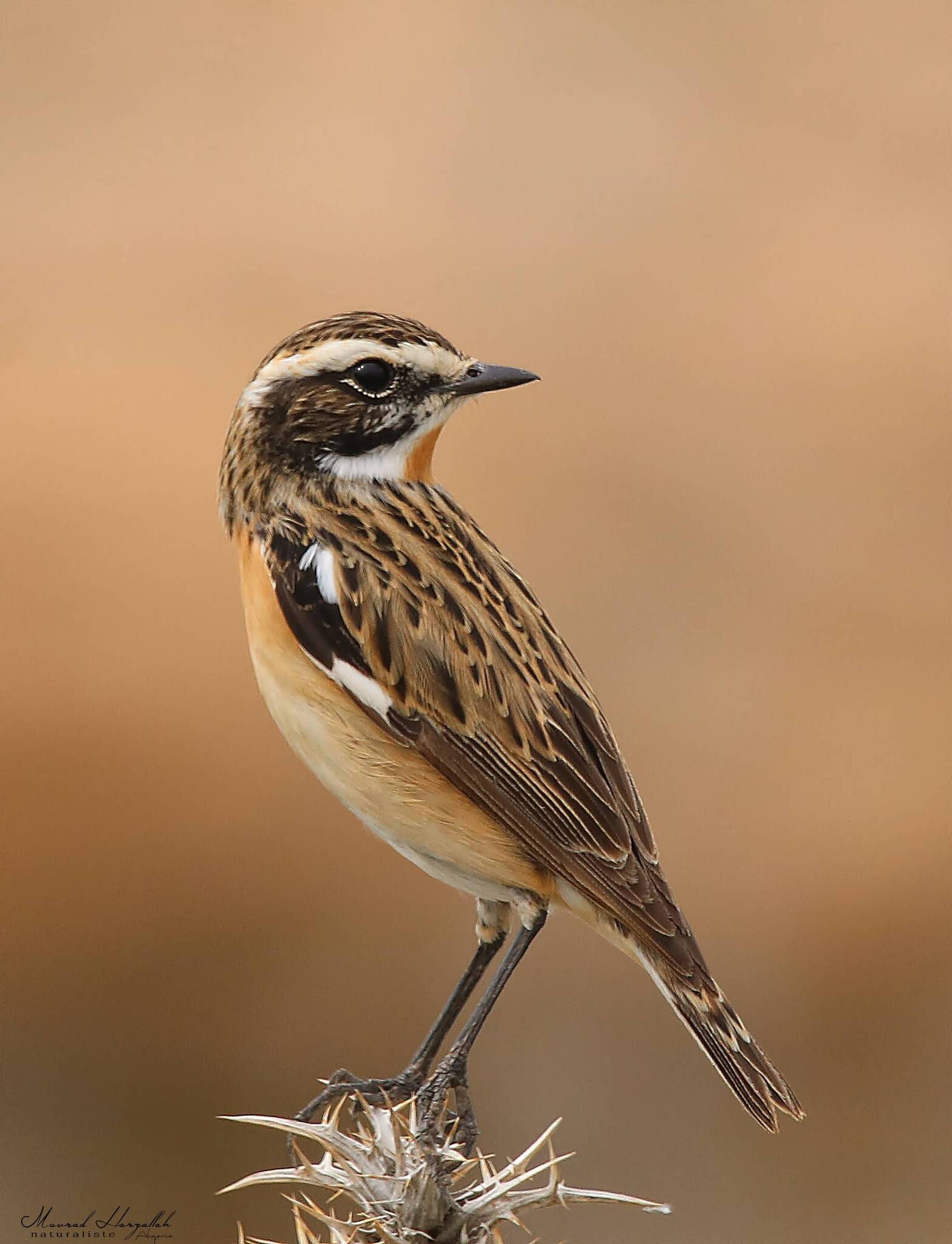
Whinchat (Saxicola rubetra) Whinchat

Media

Loading…

In short

The Common Rock Thrush and Whinchat can be distinguished by their habitat preferences and plumage. The Rock Thrush is typically found in rocky, mountainous areas, while the Whinchat prefers open fields and grasslands. Males of the Rock Thrush have a vivid blue head and rust-colored tail, whereas the Whinchat features a distinctive white supercilium and streaked back.

Identification tips

  1. Habitat: Look for the Rock Thrush in rocky, elevated areas; the Whinchat in open fields. 2. Plumage: Note the Rock Thrush's blue head and rust tail versus the Whinchat's white supercilium and streaked back. 3. Size: The Rock Thrush is larger and more robust. 4. Behavior: Observe perching habits; Rock Thrushes prefer rocks, Whinchats prefer low vegetation.

Size

The Common Rock Thrush is generally larger and more robust than the Whinchat.

Plumage

Male Common Rock Thrushes have a vivid blue head, rust-colored tail, and bright orange underparts. Females have grayish-brown upperparts with buff spotting and orange-buff underparts. Whinchats have a white supercilium, streaked back, and a more muted coloration overall, with both sexes appearing similar.

Behaviour

The Common Rock Thrush often perches on rocks or cliffs, scanning for insects before dropping to the ground to catch them. The Whinchat is more likely to be seen perched on low vegetation or fence posts, also scanning for insects.

Habitat

The Common Rock Thrush is found in rocky, mountainous regions, while the Whinchat inhabits open fields, grasslands, and sometimes moorland.

Voice

Vocalizations differ, but specific descriptions are not provided. Birdwatchers should listen for differences in song and call patterns.

Submit a better description

Use the same sections as the comparison. Your text is published immediately.

The Common Rock Thrush and Whinchat can be distinguished by their habitat preferences and plumage. The Rock Thrush is typically found in rocky, mountainous areas, while the Whinchat prefers open fields and grasslands. Males of the Rock Thrush have a vivid blue head and rust-colored tail, whereas the Whinchat features a distinctive white supercilium and streaked back.

  1. Habitat: Look for the Rock Thrush in rocky, elevated areas; the Whinchat in open fields. 2. Plumage: Note the Rock Thrush's blue head and rust tail versus the Whinchat's white supercilium and streaked back. 3. Size: The Rock Thrush is larger and more robust. 4. Behavior: Observe perching habits; Rock Thrushes prefer rocks, Whinchats prefer low vegetation.

The Common Rock Thrush is generally larger and more robust than the Whinchat.

Male Common Rock Thrushes have a vivid blue head, rust-colored tail, and bright orange underparts. Females have grayish-brown upperparts with buff spotting and orange-buff underparts. Whinchats have a white supercilium, streaked back, and a more muted coloration overall, with both sexes appearing similar.

The Common Rock Thrush often perches on rocks or cliffs, scanning for insects before dropping to the ground to catch them. The Whinchat is more likely to be seen perched on low vegetation or fence posts, also scanning for insects.

The Common Rock Thrush is found in rocky, mountainous regions, while the Whinchat inhabits open fields, grasslands, and sometimes moorland.

Vocalizations differ, but specific descriptions are not provided. Birdwatchers should listen for differences in song and call patterns.

Discard your changes?

You have unsaved edits. If you leave now, those changes will be lost.

Common Rock Thrush · Whinchat · My Tricky Birds