
Common Rosefinch vs Mongolian Finch
Carpodacus erythrinus versus Bucanetes mongolicus
Play a quiz with Common Rosefinch and Mongolian Finch
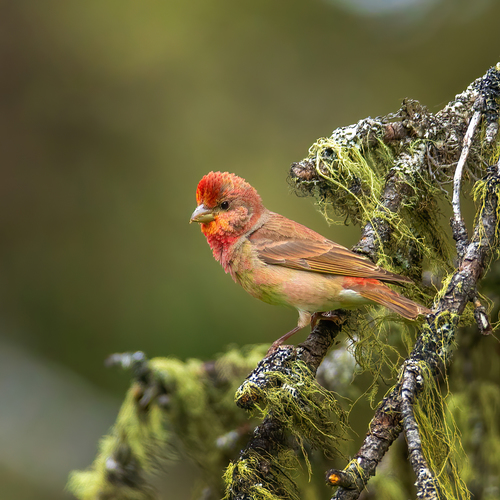 Common Rosefinch
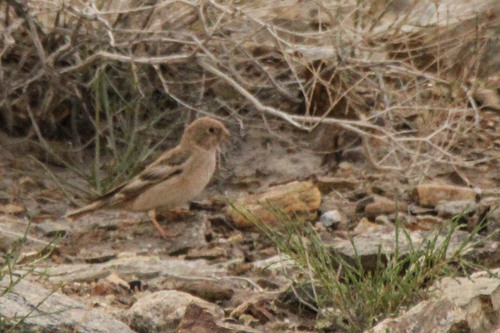 Mongolian Finch
In short
The most reliable field mark to separate Common Rosefinch from Mongolian Finch is the extent and intensity of red or pink in adult males, especially on the head and underparts, and the presence of extensive white and pink in the wings of Mongolian Finch. Immature and female birds are more challenging, but the Common Rosefinch is generally duller and browner, while Mongolian Finch shows a paler, sandier tone with a distinctive wing pattern in adults. Bill color and shape, as well as overall structure, also help: Mongolian Finch has a shorter, thicker, greyish-yellow bill and a larger head. Both species can overlap in some Central Asian habitats, but Common Rosefinch is much more widespread and likely in most of Europe.
Identification tips
- Male plumage (breeding): Look for the intensity and distribution of red/pink. Common Rosefinch males are bright rosy-carmine on the head, breast, and rump, while Mongolian Finch males have a paler pink flush, mainly on the face and underparts, and not as extensive.
- Wing pattern (all ages): Mongolian Finch shows extensive white and pink in the wings, especially obvious in flight. Common Rosefinch has dark brown wings with only two indistinct bars.
- Bill shape and color: Mongolian Finch has a short, thick, greyish-yellow bill and a large head, giving a big-headed look. Common Rosefinch has a heavier, conical bill but not as short or thick, and the color is less distinctly yellowish.
- Female/immature confusion: Female and young Common Rosefinch are yellowish-brown above, with a greyer head and buff below—overall dull and plain. Mongolian Finch females are paler, sandier, and may show faint pink in the wings, but are generally much paler than female rosefinches.
- Upperwing in flight: If you see a pale, striking wing pattern (white and pink) in flight, favor Mongolian Finch. If the wing is uniformly dark brown with only faint bars, it's likely Common Rosefinch.
- Rump color: Male Common Rosefinch has a bright rosy rump; Mongolian Finch does not show this feature as strongly.
- Habitat context: In wooded, lush, or riverine habitats, Common Rosefinch is much more likely. In arid, open, or rocky areas, especially in Central Asia, check carefully for Mongolian Finch.
- Seasonal wear: After autumn molt, male Common Rosefinch may appear duller, but the overall rosy tone remains, especially as feathers wear through winter.
- Bill/jizz in binoculars: Mongolian Finch's bill is noticeably short and thick, and the bird appears big-headed and compact. Common Rosefinch is more evenly proportioned.
- Geographic likelihood: In Europe, Common Rosefinch is widespread and common; Mongolian Finch is a rare vagrant or local in arid zones.
- Rare yellow morph: If you see a 'rosefinch' male with yellow instead of red, it's likely a Common Rosefinch with a dietary/parasite-induced color change, not a Mongolian Finch.
- Perched vs. flight views: Wing pattern is most useful in flight; perched birds may require close study of bill, head shape, and subtle plumage tones.
- No strong vocal differences provided: Use visual marks for separation.
- Check for context: If you see a flock in a garden or orchard in winter, Common Rosefinch is far more likely. In dry, open steppe or rocky slopes, especially in Asia, Mongolian Finch becomes a real possibility.
- Eggs and nest are not field marks: Ignore clutch color or nest placement for field ID.
Size
Common Rosefinch is 13–15 cm in length, with a stout, conical bill. Mongolian Finch is described as small and long-winged, with a large head and short, thick bill. While both are small finches, Mongolian Finch may appear slightly more compact and big-headed, but size alone is not a strong separator in the field.
Plumage
- Adult males (breeding): Common Rosefinch males are bright rosy-carmine on the head, breast, and rump, with dark brown wings showing two indistinct bars and a white belly. Mongolian Finch males have a pink flush to the face and underparts, but the most distinctive feature is the extensive white and pink in the wings, which is much more marked than in Common Rosefinch.
- Females and immatures: Female and young Common Rosefinch are yellowish-brown above, brighter on the rump, greyer on the head, and buff below—overall rather plain and dull. Mongolian Finch females are paler, with only a faint, almost unnoticeable pink, and show a paler, sandier tone with a contrasting wing pattern (white and pink), though less marked than in males.
- Wing pattern: Mongolian Finch of all ages shows a more striking white and pink pattern in the wings, especially in flight, while Common Rosefinch has dark brown wings with only indistinct bars.
- Bill color: Common Rosefinch has a heavy, conical bill; Mongolian Finch's bill is short, thick, and distinctly greyish-yellow.
Behaviour
No strong behavioral differences are noted in the sources for field separation. Both species are typical finches in their habits, but Mongolian Finch may appear slightly more compact and big-headed when feeding or perched.
Habitat
Common Rosefinch is found in a wide range of habitats, especially thickets, woodland, and forest edges near rivers in summer, and gardens, orchards, wetlands, and dry oak woods in winter. Mongolian Finch is more restricted to arid, open areas, especially in its core Asian range, and is much less likely in lush, wooded habitats. In Europe, Common Rosefinch is far more likely except in very specific arid, rocky, or steppe-like areas.