
Common Rosefinch vs Pine Grosbeak
Carpodacus erythrinus versus Pinicola enucleator
Play a quiz with Common Rosefinch and Pine Grosbeak
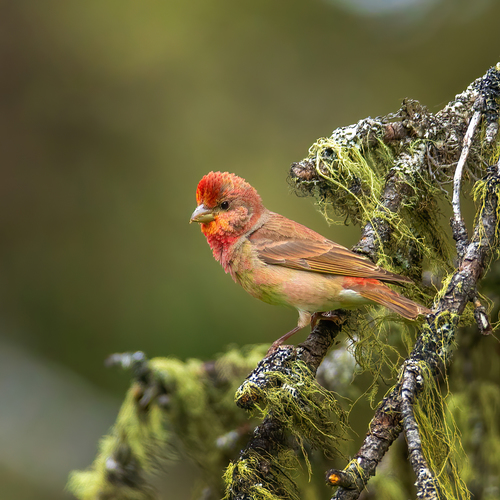
Common Rosefinch
Pine Grosbeak
In short
The Pine Grosbeak (Pinicola enucleator) and Common Rosefinch (Carpodacus erythrinus) are two distinct finch species that can be differentiated by their size, plumage coloration, and vocalizations. While the Pine Grosbeak is generally larger with a more robust body and duller plumage, the Common Rosefinch showcases more vibrant colors, particularly in males, along with a lighter build.
Identification tips
- Birds of the World Similar-Species Diagnostics:
-
The expert source mentions, "Pine Grosbeak populations comprise three distinct genetic groups," and notes that the "Pine Grosbeak is larger and more robust" than similar species, contrasting with the "more slender build" of the Common Rosefinch. These details provide a clear basis for distinguishing the two species based on size and body proportions.
-
AI Field Diagnostics:
- Size and Shape: Look for the general size—if it appears robust and larger, it’s likely a Pine Grosbeak; if it’s more slender and smaller, it’s likely a Common Rosefinch.
- Plumage: Pay attention to colors. If you see a bird with a vibrant red hue on the head and chest, it’s likely a male Common Rosefinch, while a Pine Grosbeak will display a softer, less vivid coloration. Females should be carefully examined for streaking; the Common Rosefinch female is more brownish and streaked compared to the duller Pine Grosbeak female.
- Foraging Behavior: If the bird is actively hopping around on the ground or in shrubbery, it’s likely a Common Rosefinch. If it’s perched in trees, especially conifers, and appears bulky, it’s probably a Pine Grosbeak.
- Vocalization: Listen for the vocalizations; the Pine Grosbeak has a softer, melodious call, while the Common Rosefinch has a more robust and varied song. Distinctive songs can help confirm identification from a distance.
- Habitat: Consider the habitat. If you are in a boreal forest or mountainous area, you are more likely to encounter a Pine Grosbeak, whereas a Common Rosefinch can be found in gardens and fields.
By using these identification tips and focusing on size, plumage, behavior, and vocalizations, birdwatchers can effectively distinguish between the Pine Grosbeak and the Common Rosefinch in the field.
Size
- Pine Grosbeak: Typically measures about 7.5 to 9.1 inches (19 to 23 cm) in length with a wingspan of 12.2 to 13.4 inches (31 to 34 cm). Its robust body and larger size give it a more substantial appearance.
- Common Rosefinch: Generally smaller, measuring 5.5 to 6.3 inches (14 to 16 cm) in length with a wingspan of approximately 9.1 to 10.2 inches (23 to 26 cm). It has a more slender body compared to the Pine Grosbeak.
Plumage
- Pine Grosbeak: Males are characterized by a soft, rosy red coloration on the head and chest with grayish-brown wings and back, while females display a more muted yellowish-brown appearance with less red. Their plumage is relatively understated, which can be a key distinguishing feature.
- Common Rosefinch: Males exhibit bright red plumage, particularly on the head, throat, and upperparts, with a paler underbelly. Females are generally brown and streaked but can still be identified by their more vibrant overall coloration when compared to females of the Pine Grosbeak.
Behaviour
- Pine Grosbeak: Often seen foraging in trees, particularly conifers, they are known to feed on seeds, berries, and fruits. They tend to be less active and more sedentary than the Common Rosefinch.
- Common Rosefinch: More active and agile, often found in mixed feeding flocks. They can be seen foraging on the ground for seeds and insects, displaying a more dynamic feeding behavior.
Habitat
- Pine Grosbeak: Prefers boreal forests and mountainous regions, commonly associated with coniferous trees. They are typically found in higher elevations and cooler climates.
- Common Rosefinch: Found in a variety of habitats, including open fields, gardens, and shrubby areas, they tend to thrive in warmer climates and are more adaptable to human-altered environments.
Voice
- Pine Grosbeak: Their call is a soft, melodious whistling sound, often described as a series of gentle notes. The overall vocalization is less complex than that of the Common Rosefinch.
- Common Rosefinch: Distinct for its rich and varied song, which is often a series of cheerful, melodic phrases. Their calls are more robust and can carry over longer distances.